📊 Dubai Stem Cell Therapy: What Patients Should Know
🧬 Does Dubai Offer Stem Cell Therapy?
Stem cell therapy is available in Dubai through several distinct clinical and investigational pathways, ranging from hematopoietic transplantation to defined autologous orthopedic procedures.
At one end of the spectrum is hematopoietic stem cell transplantation, or HSCT.
This is established specialist medicine used for certain blood cancers, blood disorders and immune conditions.
Dubai Health, for example, operates a pediatric bone marrow transplant program at Al Jalila Children's Hospital.
Depending on the child's condition, transplantation may use the patient's own stem cells or cells from a donor.³
Other forms of regenerative medicine in Dubai may involve cells or tissues obtained from the patient's bone marrow or adipose tissue.
More advanced categories can involve cultured cells, donor-derived products or systemic administration.
Those differences matter.
🔗 Read more → Regenerative Medicine in Dubai: Treatments, UAE Regulations & Patient Guide
🔬 What Does "Stem Cell Therapy" Actually Mean?
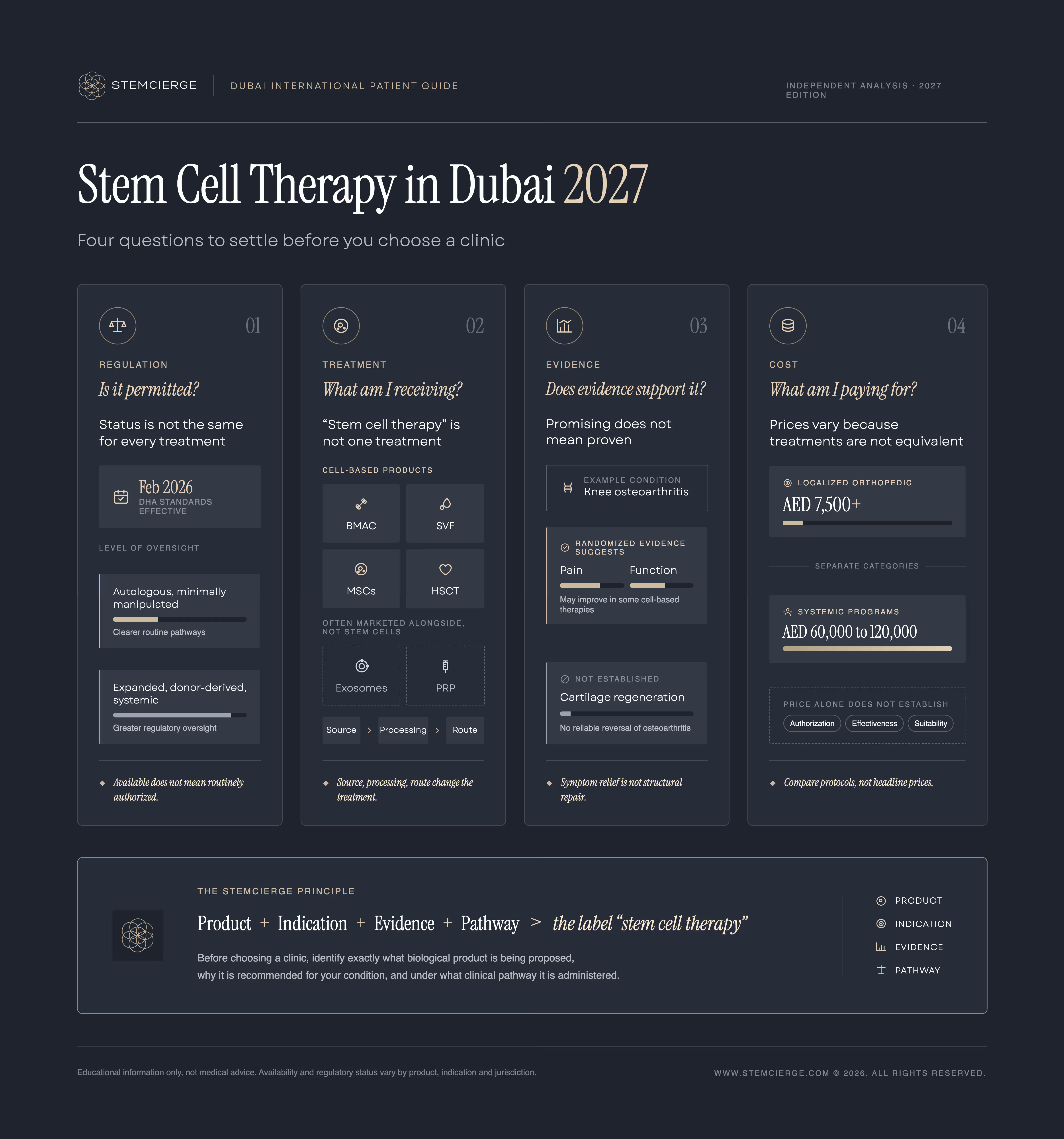
Stem cell therapy is an umbrella term covering several different cellular procedures and products.
Some are established treatments, some are regenerative procedures, and others remain investigational.
The source and processing of the cells can change both the clinical evidence and the regulatory pathway.
Dubai's standards distinguish therapies using factors such as autologous versus allogeneic source, minimal versus substantial manipulation, homologous versus non-homologous use, regulatory status and local versus systemic administration.¹
"Homologous use" simply means that the cells or tissue are being used to perform the same basic biological function they normally perform in the body.
Patients do not need to become cell biologists to evaluate treatment.
They simply need enough clarity to understand what they are actually being offered.
⚖️ Is Stem Cell Therapy Legal in Dubai in 2027?
Stem cell therapy is legal in Dubai under defined regulatory pathways, but not every cell product, medical indication or route of administration is authorized for routine clinical use.
The current Dubai Health Authority Standards for Stem Cell Services were issued on December 31, 2025 and became effective on February 28, 2026.
DHA circulated the new standards to healthcare professionals and facilities in January 2026.¹
The framework is much more useful than a simple "legal or illegal" answer.
🔗 Read more → Is Stem Cell Therapy Legal in Dubai? 2026 DHA Rules Explained
✅ How Does Dubai Classify Different Stem Cell Treatments?
🧪 What Is the Difference Between Routine and Investigational Treatment?
DHA's routine clinical framework principally focuses on qualifying autologous, minimally manipulated cells and products used within appropriate indications.¹
Examples include certain bone marrow-derived preparations and selected orthopedic applications.
Once a product is significantly altered, expanded in culture, derived from a donor or administered systemically, the regulatory position generally becomes more restrictive.
DHA states that therapies involving substantial manipulation, allogeneic sources or systemic administration should generally occur within approved clinical trials or qualifying transplant programs with prior authorization.¹
This distinction is important for anyone comparing advanced cell therapy in Dubai.
Advanced does not automatically mean approved for routine treatment.
Sometimes it means investigational.
🚫 What About Anti-Aging and Wellness Stem Cell Therapy?
Dubai has a highly visible longevity and wellness market, but the DHA standards draw an important distinction between regulated clinical cell therapy and generalized regenerative marketing.
The standards identify examples such as systemic stem cell infusions for anti-aging or immune enhancement and certain stem-cell-enriched cosmetic applications among uses that are not permitted as routine clinical services.¹
That does not mean the existence of a clinic website proves non-compliance.
A provider may operate under circumstances that are not apparent from public marketing.
It means patients should verify the exact treatment and regulatory pathway rather than assuming that advertising equals approval.
🏛️ What Role Does the Emirates Drug Establishment Play?
At the federal level, the Emirates Drug Establishment, or EDE, regulates relevant medical products and clinical investigations.
EDE states that regulatory committee approval is required before applicable interventional clinical trials can begin.²
For manufactured, expanded or donor-derived cellular products, patients should ask for the exact product name and applicable UAE authorization.
🩺 What Conditions Are Stem Cell Therapies Used For in Dubai?
Stem cell and cell-based therapies are used or studied across several medical fields in Dubai, but the strength of evidence and regulatory status varies significantly by condition.
The more useful question is not: "Which diseases do stem cells treat?"
It is:
"Which specific cellular treatment has evidence for my specific diagnosis?"
🩸 Blood and Immune Disorders
Hematopoietic stem cell transplantation has established uses for selected blood cancers, blood disorders and immune diseases.
Dubai already has specialist transplant infrastructure, including pediatric transplantation through Dubai Health.³
This form of stem cell medicine is fundamentally different from elective regenerative treatment.
🦴 Orthopedic and Musculoskeletal Conditions
Dubai's standards describe defined applications involving bone, cartilage, tendon, ligament and other musculoskeletal problems.¹
Whether a regenerative procedure makes sense still depends on the actual diagnosis.
A tendon tear, severe mechanical instability, advanced joint deformity and mild cartilage degeneration can all cause pain, but they do not necessarily require the same treatment.
🧠 Neurological and Autoimmune Conditions
Cell therapy research is active across neurological, autoimmune and degenerative disease, but many of these applications remain investigational.
For these conditions, trial registration, regulatory authorization, treatment rationale and evidence quality deserve particularly careful scrutiny.
🦵 Does Stem Cell Therapy Work for Knee Osteoarthritis in Dubai?
Stem cell-based treatment may improve pain and function for some people with knee osteoarthritis, but current evidence does not show that it consistently rebuilds cartilage or reverses the disease.
This is one of the most important regenerative medicine questions in Dubai.
Knee and osteoarthritis represent a meaningful part of local stem cell demand, and Dubai's current regulatory framework specifically addresses localized osteoarthritis and cartilage injury within defined autologous orthopedic pathways.¹
🔬 What Does the Latest Evidence Show for Knee Osteoarthritis?
A 2026 systematic review and meta-analysis evaluated 28 randomized controlled trials of intra-articular mesenchymal stem or stromal cell-based therapy for knee osteoarthritis.⁴
The researchers found modest improvements in several pain and functional outcomes. However, results varied significantly between studies, and MRI measures did not show consistent structural improvement.
The authors concluded that current evidence supports a primarily symptom-modifying rather than reliably structure-modifying role.⁴
Local reactions also deserve attention. Injection-site pain and joint swelling occurred more frequently in the stem-cell groups, while serious complications were uncommon in the included trials.⁴
A separate 2024 systematic review included 25 randomized controlled trials and 1,048 participants.
It found possible improvements in pain but rated much of the overall evidence as uncertain because of differences between studies and methodological limitations.⁵
In practical terms:
Some patients may feel better without the treatment necessarily rebuilding the damaged joint.
The studies differ substantially in:
- cell source
- processing method
- cell preparation
- dose
- number of injections
- osteoarthritis severity
- comparator treatment
- injection technique
- follow-up period
That makes sweeping claims such as "stem cells regrow knee cartilage" difficult to support.
🔗 Read more → Knee Osteoarthritis Stem Cell Therapy in Dubai: Costs, Evidence & Treatment Options
🧬 What Types of Knee Regenerative Treatment May Be Offered?
Orthopedic regenerative treatment is not one procedure.
Patients researching stem cell therapy for knee osteoarthritis in Dubai may encounter terms such as:
- BMA or BMAC
- adipose-derived SVF
- MSCs
- PRP combined with cellular treatment
- other regenerative adjuncts
These are not automatically interchangeable.
Dubai's current standards specifically contemplate autologous SVF for localized osteoarthritis and cartilage injury in defined same-day applications, while expanded or more extensively manipulated cellular products follow a different regulatory pathway.¹
This is why comparing clinics based only on an advertised number of "stem cells" can be misleading.
👤 Who Might Be a Reasonable Candidate?
Suitability depends on much more than having knee pain.
A proper orthopedic assessment may consider:
- the exact diagnosis
- osteoarthritis severity
- degree and location of cartilage loss
- limb alignment
- meniscus damage
- ligament stability
- previous surgery
- activity level
- previous conservative treatment
- overall health
- treatment goals
Someone with mild-to-moderate osteoarthritis and preserved joint structure may face a very different treatment decision from someone with severe bone-on-bone disease and major mechanical deformity.
🎯 What Outcome Should Patients Realistically Expect?
Based on the current evidence, the most defensible goal is generally potential symptom and function improvement, not guaranteed joint regeneration.
A useful consultation should therefore answer:
- What improvement is realistic for my grade of osteoarthritis?
- How will treatment success be measured?
- How long might any benefit last?
- What evidence supports the exact procedure being proposed?
- What happens if the treatment does not work?
- Would surgery, rehabilitation or another established treatment be more appropriate?
For patients comparing Dubai clinics, the practical issue is therefore not simply whether "stem cells work." It is whether the proposed biological product, procedure and expected outcome match the evidence for their particular pattern and severity of osteoarthritis.
🔗 Read more → Orthopedic Stem Cell Guide: Best Countries in 2026
💰 How Much Does Stem Cell Therapy Cost in Dubai?
Stem cell therapy in Dubai can cost from several thousand dirhams for a focused orthopedic procedure to tens of thousands of dirhams for larger cellular programs. There is no useful single average because the treatments being compared may be fundamentally different.
Published Dubai pricing examples identified in STEMCIERGE's August 2026 market review included:
Currency equivalents are approximate and fluctuate.
*Published availability or pricing does not establish regulatory authorization, evidence of effectiveness or suitability for an individual patient.
Systemic cellular therapies have a different regulatory context from qualifying localized autologous procedures.
💵 Why Do Stem Cell Treatment Prices Vary So Much?
Price can change according to:
- cell source and processing
- autologous versus donor-derived cells
- viable cell dose and number of treatment areas
- route of administration and number of sessions
- imaging, physician and laboratory requirements
- rehabilitation and follow-up
A AED 7,500 (approximately USD $2,040 / AUD $2,840) joint procedure and a AED 120,000 (approximately USD $32,675 / AUD $45,425) systemic cellular program are not simply budget and premium versions of one treatment.
They may be biologically, clinically and regulatorily different.
STEMCIERGE therefore separates individual procedures, multi-session programs and systemic treatment packages in its pricing research rather than averaging them together as though they were directly comparable.⁸
In reviewing the Dubai market, we found enough variation in cell source, processing, treatment scope and administration route that comparing headline prices or advertised cell counts alone can give patients a misleading picture of value.
🔗 Read more → Stem Cell Therapy Cost in Dubai: Pricing Guide
🔗 Read more → Global Stem Cell Therapy Cost: Prices by Country & Treatment
🔎 How Do You Choose a Stem Cell Clinic in Dubai?
Start by verifying the clinic and physician, then go deeper into the exact cell product, laboratory standards, regulatory pathway and evidence supporting your treatment.
A polished clinic, impressive website or large advertised cell count does not answer the questions that matter most.
Before committing, consider asking:
- Who is the physician responsible for deciding whether I am actually a candidate?
- What exact biological product am I receiving?
- Are the cells autologous or donor-derived?
- What tissue are they derived from?
- Have the cells been cultured or expanded?
- What is the viable cell dose?
- Where were the cells processed or manufactured?
- Under what regulatory pathway is this treatment being administered for my condition?
- What published evidence supports this product, route and indication?
For more advanced products, quality-control documentation becomes particularly important.
DHA's standards include product-quality requirements covering factors such as identity, sterility and cellular viability.¹
Depending on the proposed product, it may therefore be reasonable to ask what release testing was performed and what documentation is available.
The goal is not to turn the consultation into an interrogation.
It is to make sure you understand what you are consenting to before spending significant money and traveling for treatment.
🔗 Read more → How to Choose the Best Stem Cell Clinic in Dubai for Your Condition
⚠️ What Are the Risks of Stem Cell Therapy?
The risks depend on the procedure. There is no single safety profile for everything marketed as stem cell therapy.
A localized orthopedic procedure may involve risks such as:
- temporary pain
- swelling
- bleeding
- inflammation
- infection
- complications related to tissue harvesting
- complications related to injection technique
The 2026 knee osteoarthritis meta-analysis found higher rates of injection-site pain and joint swelling with MSC-based therapy than with controls, while serious complications were uncommon in the included randomized trials.⁴
Expanded, manufactured or systemically administered cell products introduce additional risks and quality considerations, including product identity, contamination, cell viability, manufacturing consistency and immune reactions.
HSCT is different again.
It is an intensive specialist treatment with a substantially different risk profile from an outpatient orthopedic procedure.
This is why asking: "Is stem cell therapy safe?" is too broad.
A better question is: "What are the known risks of this exact treatment for someone with my diagnosis and medical history?"
The International Society for Stem Cell Research recommends that substantially manipulated or non-homologous stem cell interventions demonstrate safety and effectiveness before entering routine clinical care.⁶
✈️ What Should International Patients Know Before Traveling to Dubai?
Complete as much medical review as possible before booking flights. Ideally, you should travel with a defined treatment proposal rather than arrive in Dubai still unsure what the clinic intends to do.
Before committing, ask for:
- review of your current medical records
- recent imaging where relevant
- physician consultation
- proposed biological product
- intended treatment sites
- route of administration
- number of sessions
- expected stay
- written pricing and inclusions
- follow-up plan
- medication instructions before and after treatment
Ask for the treatment plan and total expected price in writing before paying a substantial deposit.
If you take anticoagulants, immunosuppressants or other clinically important medications, disclose them during your medical review.
Never stop prescribed medication simply to qualify for a procedure without guidance from the appropriate clinician.
Also ask what happens after you return home.
Who reviews your progress? Can follow-up be completed remotely?
What happens if you experience a complication several weeks later?
A treatment may take only a few hours. The care pathway should extend beyond the procedure itself.
🌆 Is Dubai a Good Destination for Stem Cell Therapy?
Dubai can be an attractive destination for selected patients because of its healthcare infrastructure, international accessibility and formal regulatory environment.
The city itself, however, cannot tell you whether a particular treatment is appropriate or evidence-based.
The latest official medical-tourism figure identified in this review reported 691,478 medical tourists in Dubai in 2023, with direct healthcare spending exceeding AED 1.034 billion.⁷
Dubai's advantages include:
- modern private healthcare infrastructure
- substantial international-patient experience
- convenient air access from Europe, Asia and the Middle East
- specialist hospitals and diagnostics
- a defined regulatory framework for cell therapies
- a growing regenerative medicine ecosystem
Potential limitations include:
- relatively high private-pay pricing
- major variation between clinic protocols
- advanced treatments that may remain investigational
- regenerative marketing that can be difficult for patients to interpret
🇦🇪 What About Stem Cell Therapy in Abu Dhabi?
Abu Dhabi is also an important center for stem cell therapy and regenerative medicine in the UAE, particularly in advanced cell research, hematology and investigational therapies.
However, patients should not assume that stem cell treatment in Abu Dhabi and Dubai operates under exactly the same local regulatory framework.
Abu Dhabi has developed notable infrastructure around cell therapy through institutions such as the Abu Dhabi Stem Cells Center (ADSCC), which is involved in clinical research, cell processing and advanced therapeutic programs.
Its research activity has included neurological and other complex conditions, reflecting Abu Dhabi's broader role as a research and specialist-care hub within the UAE.
This creates an important distinction for international patients.
The UAE has federal regulation relevant to medical products and clinical research, but healthcare delivery is also governed through local health authorities.
Dubai providers operate within the Dubai Health Authority framework discussed throughout this guide, while healthcare facilities in Abu Dhabi operate within Abu Dhabi's own local regulatory environment.
In practical terms, a treatment being available or studied in Abu Dhabi does not automatically mean that the same product, indication or clinical pathway is routinely authorized in Dubai, and vice versa.
🧭 How STEMCIERGE Helps Patients Compare Treatment Options
STEMCIERGE approaches regenerative medicine as a decision-making problem rather than a clinic-directory problem.
We look beyond the label "stem cell therapy" and compare factors such as:
- diagnosis and treatment goals
- cell source and type
- treatment configuration
- route of administration
- physician and provider
- clinical evidence
- regulatory context
- pricing
- follow-up
- medical-travel practicality
Sometimes the most valuable outcome of an independent review is finding a treatment worth exploring.
Sometimes it is identifying the questions that still need answering before treatment makes sense.
✔️ Stem Cell Therapy in Dubai: The Bottom Line
Dubai has developed a significant regenerative medicine ecosystem and, since February 2026, a much more detailed framework governing stem cell services.
That is useful for patients.
But the most important question is still not: "Does this clinic offer stem cells?"
It is: "What exactly am I being offered, why is it appropriate for my condition, what evidence supports it, and under what regulatory pathway is it being provided?"
Know your diagnosis. Identify the biological product.
Understand how it was processed. Verify the physician and clinic.
Compare like with like when reviewing prices. Ask what outcome is realistic.
That level of due diligence does not make regenerative medicine less promising.
It makes it easier to distinguish a well-defined medical decision from an attractive marketing promise.
🔗 Read more → 7 Essential Questions to Ask Before Choosing a Stem Cell Clinic Abroad
🔗 Compare treatments → How to Compare Stem Cell Treatments: Free Evaluation Scorecard
❓ Frequently Asked Questions About Stem Cell Therapy in Dubai
Is stem cell therapy legal in Dubai?
Yes. Specific stem cell treatments can legally be provided in Dubai under defined regulatory pathways. DHA distinguishes treatments according to factors including cell source, manipulation, intended use and route of administration. Expanded, donor-derived and systemic products generally face more stringent requirements.¹
How much does stem cell therapy cost in Dubai?
Published prices vary widely. Focused orthopedic procedures may cost several thousand dirhams, while larger or more complex cellular programs can cost tens of thousands of dirhams. Compare the complete treatment protocol rather than the headline price alone.
Does Dubai offer stem cell therapy for knee osteoarthritis?
Yes. Dubai's current standards include defined autologous orthopedic pathways relevant to localized osteoarthritis and cartilage injury.¹ Current clinical evidence suggests some cell-based therapies may improve pain and function, although reliable cartilage regeneration has not been demonstrated.⁴˒⁵
Are IV stem cells legal in Dubai?
Systemic administration has a more restrictive regulatory position. DHA states that treatment involving systemic administration, substantial manipulation or allogeneic sources generally requires a more specific authorized pathway, such as approved clinical research or qualifying transplantation.¹
Are donor stem cells allowed in Dubai?
Donor-derived cells can be used within defined transplant or authorized therapeutic pathways. Regenerative allogeneic cell products generally face tighter regulatory requirements than qualifying autologous procedures.¹
Are exosomes stem cells?
No. Exosomes are microscopic extracellular vesicles released by cells. They carry biological signals but are not living stem cells.
🔗 Read more → Exosome Therapy in Dubai: Costs, Evidence, Safety & UAE Regulations
Is stem cell therapy approved for anti-aging in Dubai?
DHA identifies systemic stem cell infusions for anti-aging and certain stem-cell-enriched cosmetic applications among uses that are not permitted as routine clinical services under its current standards.¹
🔗 Read more → Longevity Medicine in Dubai: Treatments, Costs, Evidence & How to Choose a Program
Does a DHA-licensed clinic mean every stem cell treatment it offers is approved?
No. Facility licensing and authorization of a specific cellular product or clinical use are different questions. Patients should verify both the clinic and the exact treatment pathway.
🔬 How STEMCIERGE Researched This Guide
STEMCIERGE developed this guide using current Dubai Health Authority standards and circulars, UAE federal regulatory information, peer-reviewed clinical research, international stem-cell guidance, and current Dubai treatment-pricing data.
For regulatory claims, we prioritized primary sources from the Dubai Health Authority and Emirates Drug Establishment. For treatment effectiveness and safety, we gave greater weight to systematic reviews, randomized controlled trials, clinical guidelines and recognized scientific organizations than to individual studies, preclinical research or commercial treatment claims.
Because "stem cell therapy" can describe biologically different interventions, evidence was evaluated according to the specific cell or tissue product, source, processing method, route of administration and medical indication rather than assuming that findings from one type of cell therapy apply to another.
For pricing and market comparisons, STEMCIERGE used its Global Pricing Review, which currently includes hundreds of regenerative-medicine pricing records across major international treatment markets, together with dated first-party provider pricing. Individual procedures, multi-session programs and systemic cellular packages were evaluated separately rather than combined into a potentially misleading single average.⁸
Provider websites may be used to document current treatment offerings, protocols or published prices, but commercial availability and provider marketing are not treated as evidence of effectiveness or regulatory authorization.
Regulations, treatment availability, clinical evidence and pricing continue to evolve. Patients should verify the exact product, indication, physician and current regulatory pathway before proceeding with treatment.
🔖 Medical Disclaimer
This article is for educational and informational purposes only. It does not provide medical advice, diagnosis or a treatment recommendation. Stem cell treatment eligibility, risks, regulatory status and expected outcomes vary by patient, product and procedure. Always consult an appropriately licensed physician and independently verify treatment documentation before making a medical decision.
📚 References
1. Dubai Health Authority. Standards for Stem Cell Services. Issue date: December 31, 2025. Effective date: February 28, 2026.
DHA Standards for Stem Cell Services
2. Emirates Drug Establishment. Assessment of Medical Products for Pharmacological Research and Clinical Studies of Drugs.
EDE clinical-study regulatory service
3. Dubai Health. Bone Marrow Transplant for Children, Al Jalila Children's Hospital. Last updated July 5, 2026.
Dubai Health pediatric bone marrow transplant program
4. Awad G, Saad JP, Hamyeh A, Boutros M. Efficacy and safety of intra-articular mesenchymal stem cell-based therapies in knee osteoarthritis: a systematic review and meta-analysis of randomized controlled trials. Clinical Rheumatology. 2026;45(5):2905-2942. DOI: 10.1007/s10067-026-08042-w.
5. Tabet CG, Pacheco RL, Martimbianco ALC, et al. Advanced therapy with mesenchymal stromal cells for knee osteoarthritis: systematic review and meta-analysis of randomized controlled trials. Journal of Orthopaedic Translation. 2024;48:176-189. DOI: 10.1016/j.jot.2024.07.012.
6. International Society for Stem Cell Research. Guidelines for Stem Cell Research and Clinical Translation. Version 1.2, August 2025.
ISSCR clinical translation guidance
7. Government of Dubai Media Office. DHA and DET Sign MoU to Boost Dubai's Medical Tourism Sector. September 18, 2024.
Dubai medical tourism data
8. STEMCIERGE Global Regenerative Medicine Pricing Review. UAE market observations verified August 2026. Individual procedures, multi-session programs and systemic packages are analyzed separately rather than averaged as equivalent treatments.