🇹🇭 Best Stem Cell Therapy Destinations in Thailand
Bangkok generally provides the greatest depth for complex treatment, established hematopoietic stem cell transplantation and regulated clinical research.
Phuket may suit medically stable patients who want private-hospital access combined with resort recovery.
Koh Samui may appeal to carefully selected patients seeking privacy, premium personalized care and a calmer recovery setting.
The right destination depends on more than the location.
Patients should first evaluate:
- The condition being treated
- Whether the procedure is established or investigational
- The responsible physician
- The exact cell product
- The laboratory and manufacturing process
- The evidence supporting the protocol
- The plan for managing complications
A favorable travel setting cannot turn an experimental intervention into an established medical treatment.
Choose the treatment category, specialist team and exact cell product before choosing the destination.
🎧 Watch the explainer video: Best Places for Stem Cell Therapy in Thailand
📌 Key Insights: Where To Get Stem Cell Therapy in Thailand
- There is no single best location for every type of stem cell therapy in Thailand.
- Bangkok offers the strongest medical infrastructure for transplantation, complex cases and academic ATMP research.
- Phuket may suit stable elective patients seeking hospital access, direct international travel and resort recovery.
- Koh Samui may suit carefully selected patients who value privacy, close coordination and a lower-stress recovery environment.
- Chiang Mai, Pattaya and the Eastern Seaboard may offer rehabilitation, wellness or follow-up services.
- For most investigational treatments, the exact protocol matters more than the city.
🗺️ Thailand's Best Regenerative Hubs Compared: Bangkok vs Phuket vs Koh Samui
Bangkok’s advantage is clearest when a patient needs complex hospital care.
For many regenerative medicine patients, however, the decision is more nuanced.
Someone considering an orthopedic procedure may reasonably compare physician access, rehabilitation, travel logistics, treatment coordination and recovery environment alongside hospital capabilities.
🧬 Before Comparing Cities: Not All Stem Cell Treatments Are the Same
The term stem cell therapy is often used as if it describes one standardized procedure.
It does not. It can refer to treatments with very different purposes, evidence levels, manufacturing requirements and risks.
Understanding the category being considered is essential before comparing Bangkok, Phuket and Koh Samui.
🩸 Hematopoietic Stem Cell Transplantation
Hematopoietic stem cell transplantation is an established hospital treatment for selected blood cancers, bone-marrow disorders and immune conditions.
It may require donor matching, conditioning therapy, infection isolation, blood-bank support and intensive monitoring.
This category is fundamentally different from elective MSC injections or wellness infusions.
Thailand’s healthcare standards recognize these as hospital-based treatments for defined medical indications.¹
Patients considering transplantation should prioritize comprehensive hospital infrastructure, which is one reason Bangkok leads this comparison.
🧫 Mesenchymal Stromal or Stem Cell Treatments
Mesenchymal stromal or stem cells (MSCs), may use cells derived from bone marrow, adipose tissue, umbilical-cord tissue or other sources.
They may be injected into a joint, administered intravenously or delivered through another route.
Their safety and potential effectiveness depend on more than the tissue source.
Processing, expansion, sterility, viable dose, passage number, administration route and the condition being treated all determine safety, quality or effectiveness.
The Thai FDA’s regulatory approach evaluates the wider product pathway, including production, testing, storage, transportation and pre-administration handling.²
👤 Autologous vs Allogeneic Cells
Autologous cells come from the patient, while allogeneic cells come from a donor.
Neither category is automatically proven or superior: the exact product, processing method and intended use still require evaluation.
Autologous does not automatically mean more suitable or risk-free.
Likewise, a product described as “umbilical-cord-derived” is not automatically approved, clinically appropriate or more effective than another cell source.
The exact product, processing method and intended use still require evaluation.
🔬 Exosomes Are Not Stem Cells
Exosomes are extracellular vesicles involved in cell signaling.
They are often marketed alongside stem cell treatments, secretomes and regenerative medicine programs, but they are a separate product category.
Their evidence and regulatory status should be assessed independently.
A clinic’s use of terms such as “exosome,” “secretome” or “cell-free stem cell therapy” does not prove that the intervention is approved or clinically effective.³
📊 Which Stem Cell Treatments Are Established?
Only a limited number of stem cell applications are established medical treatments.
The International Society for Stem Cell Research (ISSCR) advises patients to distinguish between properly tested therapies and interventions that have not completed appropriate clinical evaluation or regulatory review.⁴
Commercial availability does not establish clinical effectiveness.
A clinic may legally operate as a healthcare facility while offering a treatment whose effectiveness for a particular condition remains uncertain.
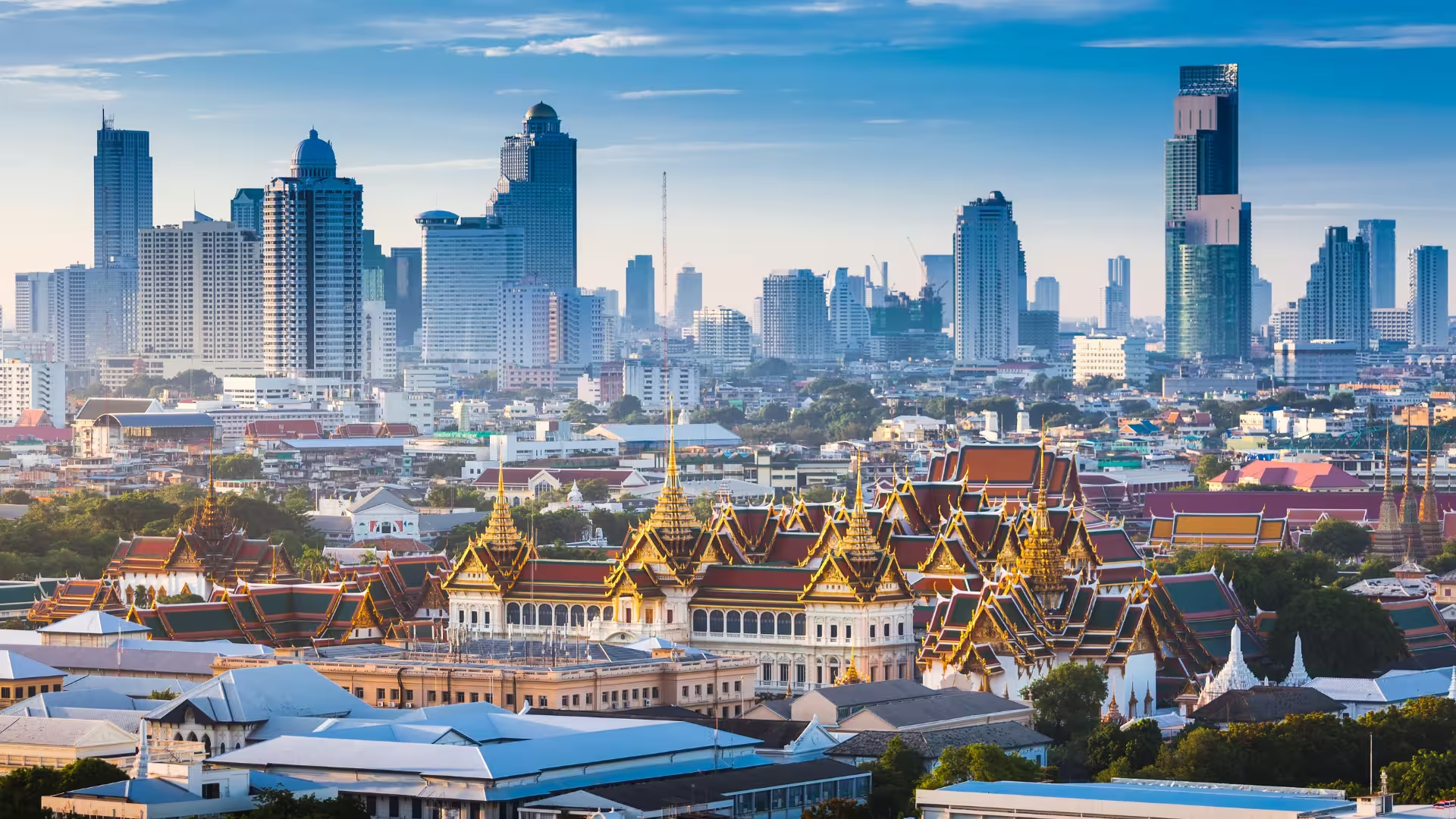
🏙️ Why Is Bangkok The Best for Complex Stem Cell Treatments?
Bangkok is Thailand’s strongest destination for complex stem cell care because it has the greatest concentration of specialist hospitals, transplant programs, academic institutions and high-acuity medical support.
It should generally be prioritized by patients who require:
- Hematology or oncology care
- Blood and marrow transplantation
- Immunosuppressive treatment
- Infectious-disease support
- Intensive care
- Advanced imaging
- Multiple medical specialists
- Participation in regulated clinical research
🏥 Hospital-Based Transplant Capabilities
Multiple Bangkok hospitals publicly document hematopoietic stem cell or blood-and-marrow transplant programs.
These programs are designed to manage:
- Conditioning therapy
- Donor matching
- Immune suppression
- Infection risk
- Graft complications
- Blood-product support
- Long-term follow-up
This level of infrastructure is fundamentally different from an outpatient regenerative medicine clinic.⁶
🧪 Academic and ATMP Research
Bangkok is also the center of Thailand’s visible academic ATMP ecosystem.
Major institutions involved in regulated cell and gene therapy initiatives include:
- Chulalongkorn University and Hospital
- Ramathibodi Hospital
- Siriraj Hospital
This gives Bangkok a stronger concentration of academic researchers, specialist clinicians, manufacturing initiatives and tertiary medical resources.
It does not mean every clinic in Bangkok is equally credible.
The city also has a large commercial market advertising MSCs, orthopedic procedures, IV therapies, exosomes and wellness programs.
Each provider and product still needs to be assessed independently.
👥 Who Should Prioritize Bangkok?
Bangkok is generally most appropriate for:
- Patients with active or recent cancer
- Immunocompromised patients
- Patients being evaluated for transplantation
- Medically complex neurological cases
- Patients with several serious diagnoses
- Clinical-trial participants
- Patients who may require emergency multidisciplinary care
- Anyone prioritizing medical depth over recovery setting
🚦 What Are Bangkok’s Disadvantages?
Bangkok is busy, urban and less retreat-oriented than Thailand’s island destinations.
Patients may experience:
- Heavy traffic
- Longer travel between accommodation and treatment facilities
- A more institutional recovery environment
- Higher costs at some major hospitals
- Less privacy than in a smaller destination
For complex treatment, these drawbacks are usually secondary to the city’s medical capabilities.

🌊 Is Phuket a Good Place for Stem Cell Therapy?
Phuket may suit medically stable elective patients who want private-hospital access, international travel connections and resort-style recovery.
Its strongest proposition is not complex transplantation.
It is the combination of a developed medical-tourism infrastructure and a more restorative setting.
✈️ What Are Phuket’s Advantages?
Phuket offers:
- A direct international airport
- Private hospitals
- Diagnostic services
- Rehabilitation options
- Long-stay accommodation
- Resort recovery
- Established international-patient infrastructure
- Easier access than a smaller island destination
Several providers in Phuket publicly advertise donor-derived or patient-derived MSC programs, orthopedic procedures, IV infusions, anti-aging treatments and multi-day treatment packages.
These descriptions show what is commercially available.
They do not independently prove that every product or indication is Thai FDA-authorized or clinically effective.
💉 PRP Is Not Stem Cell Therapy
Some Phuket regenerative medicine centers offer platelet-rich plasma, or PRP, alongside stem cell services.
PRP is produced from a patient’s blood and contains concentrated platelets.
It is not a stem cell product. Its mechanism, evidence and regulatory profile are different.
A clinic offering PRP does not necessarily have the laboratory, manufacturing or regulatory infrastructure required for expanded or donor-derived cellular products.
☑️ Who May Consider Phuket?
Phuket may be appropriate for:
- Medically stable orthopedic patients
- Patients who have completed specialist screening
- Lower-risk outpatient procedures
- Patients who want an extended recovery stay
- Patients who value direct international access
- Patients whose protocol and provider have been independently verified
🏥 Who Should Usually Prioritize Bangkok?
Bangkok may be more appropriate for:
- Hematologic transplantation
- Active cancer
- Severe immune suppression
- Medically unstable patients
- Procedures requiring intensive monitoring
- Patients needing multiple tertiary specialists
- Anyone without a documented escalation plan
Before booking treatment in Phuket, ask:
- Which hospital will receive me if a complication occurs?
- How far is the hospital from the clinic?
- Is emergency transport available 24 hours a day?
- Where are the cells processed?
- How are they transported?
- How is temperature control documented?
- Who monitors me after I leave the clinic?
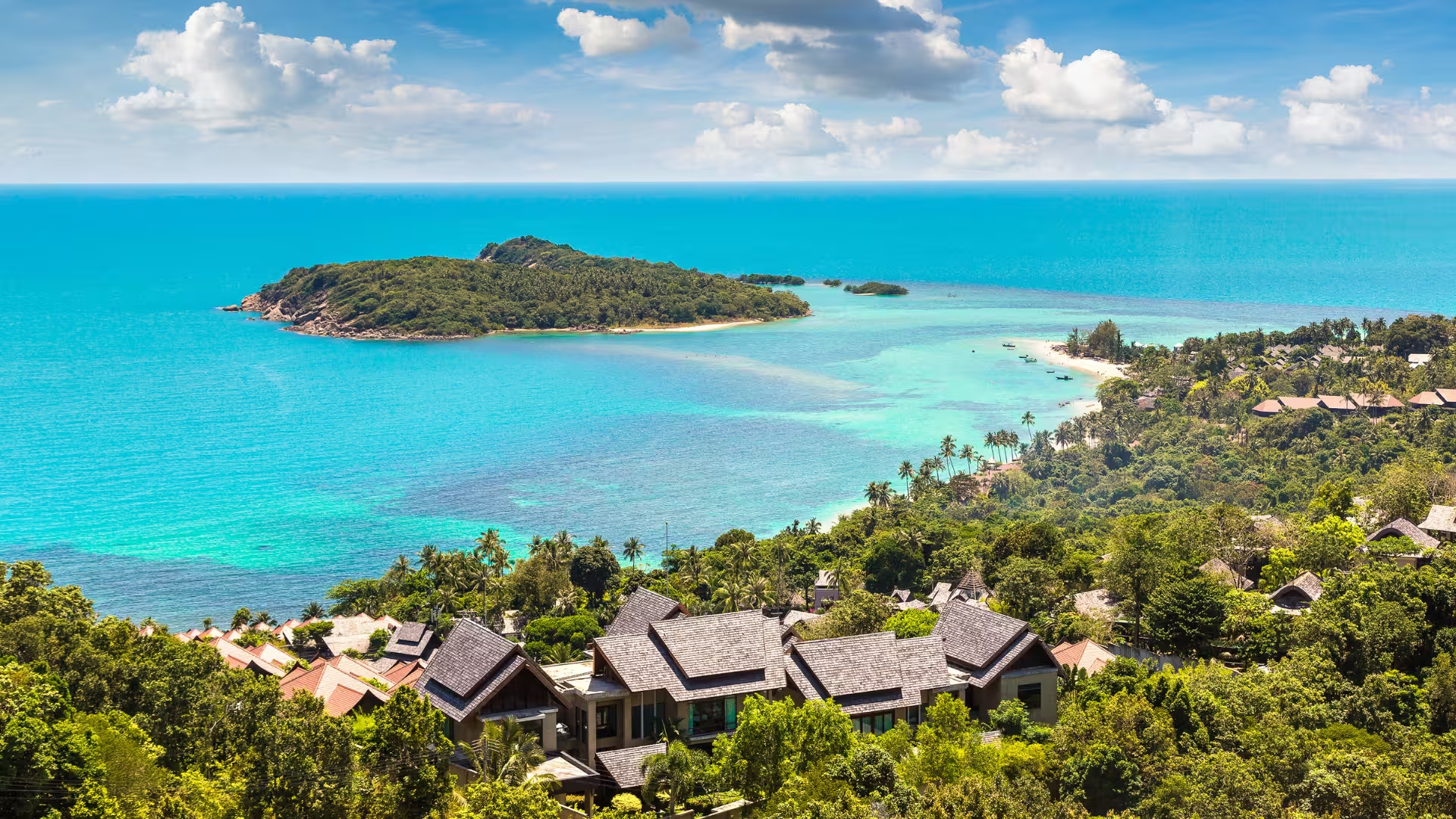
🌴 Is Koh Samui a Good Place for Stem Cell Therapy?
Koh Samui may appeal to carefully selected patients seeking privacy, personalized care and a premium recovery environment.
The island is emerging as a destination for high-end, physician-led regenerative medicine and longevity market.
Publicly advertised programs include orthopedic procedures, MSCs, exosomes, IV therapies, rehabilitation, chronic-pain programs and wellness services.
These descriptions document what providers market.
They do not independently establish product authorization, treatment effectiveness or suitability for a particular patient.
🌿 What Makes Koh Samui Attractive?
Koh Samui may offer:
- Greater privacy
- Lower-stress surroundings
- Luxury accommodation
- Longer treatment stays
- Personalized support
- Wellness and rehabilitation services
- Easier coordination between treatment and recovery
- A less institutional atmosphere
For a medically stable patient completing a multi-day treatment program, these factors may create a more comfortable and controlled recovery experience.
The patient may spend less time moving through traffic or between large hospital departments.
Treatment, rehabilitation and accommodation may also be easier to coordinate within one area.
These are meaningful advantages, but only after medical suitability has been established.
🚑 What Is Koh Samui’s Main Limitation?
The available public materials do not document an island-based blood-and-marrow transplant ecosystem comparable with Bangkok’s major hospitals.
This matters when a patient might require:
- Intensive care
- Advanced hematology
- Complex infectious-disease management
- Multiple hospital specialists
- Emergency interventional treatment
- Transfer to Bangkok or the mainland
Koh Samui has an international airport and 24/7 private-hospital services.
However, convenient travel is not the same as having a full tertiary-care ecosystem nearby.
☑️ Who May Consider Koh Samui?
Koh Samui may be suitable for:
- Medically stable patients
- Carefully selected outpatient cases
- Patients receiving a separately verified protocol
- Patients who value privacy and extended recovery
- Patients seeking close coordination between treatment and rehabilitation
- Patients with a written receiving-hospital and transfer plan
- Patients who have arranged follow-up after returning home
🏥 Who Should Choose a Larger Medical Center?
Bangkok may be more appropriate for:
- Complex transplant patients
- Active cancer patients
- Immunocompromised patients
- Patients requiring several tertiary specialists
- Patients needing frequent advanced diagnostics
- Anyone at meaningful risk of acute deterioration
🧭 What About Other Stem Cell Therapy Destinations in Thailand?
Bangkok, Phuket and Koh Samui are not the only Thai destinations where patients may encounter regenerative medicine, rehabilitation or longevity services.
Providers may also operate in Chiang Mai, Pattaya and the Eastern Seaboard.

⛰️ Stem Cell Therapy in Chiang Mai
Chiang Mai may appeal to patients seeking:
- A quieter urban environment
- Longer recovery stays
- Rehabilitation
- Longevity services
- Lower-density surroundings
- Private medical care in northern Thailand
However, Thailand’s most visible ATMP initiatives remain concentrated around Bangkok’s academic institutions.
Patients considering Chiang Mai should verify the provider’s:
- Medical specialty
- Facility authorization
- Laboratory arrangements
- Product documentation
- Hospital support
- Emergency-transfer plan
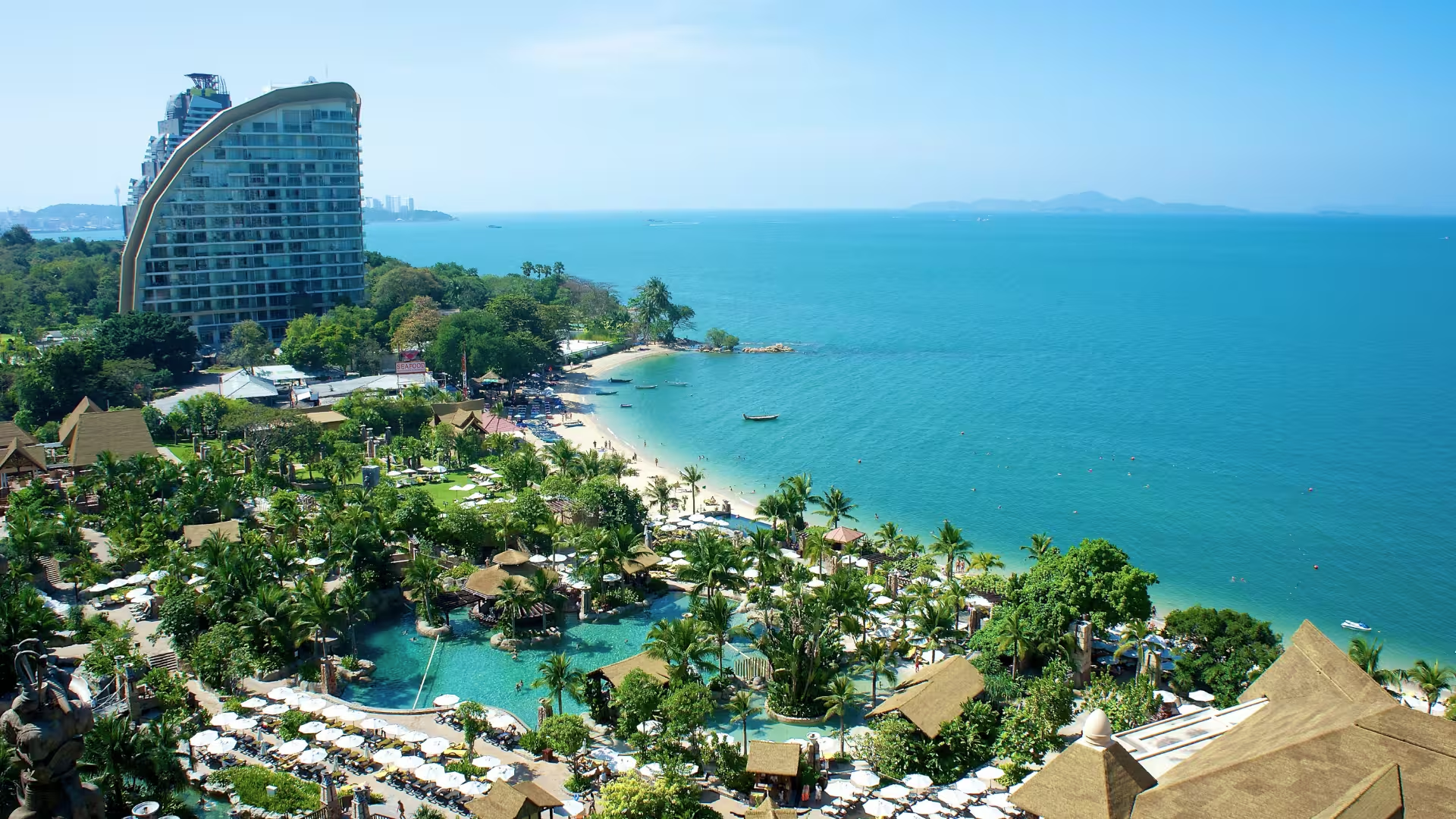
🌅 Stem Cell Therapy in Pattaya and the Eastern Seaboard
Pattaya and the Eastern Seaboard may offer:
- Private-clinic services
- Rehabilitation
- Wellness programs
- Easier access from Bangkok
- Recovery accommodation
- Proximity to mainland transport routes
These locations may be practical for patients who want to recover outside central Bangkok while remaining within reach of larger medical centers.
That advantage depends on the clinic’s actual referral and transfer arrangements.
📍 Should Other Destinations Be Excluded?
No. A provider outside Bangkok, Phuket or Koh Samui may still be appropriate if it can document strong disease-specific expertise, suitable hospital support and the correct regulatory pathway.
The destination should not be ranked solely by tourism appeal or brand recognition.
The right question is not: “Which city in Thailand has the best stem cell clinics?”
It is:
“Which provider has the right expertise, product, oversight and medical support for my specific condition?”
🇹🇭 Which Destination Fits Your Situation?
🩸 You Need Blood or Bone-Marrow Transplantation
Start with a comprehensive Bangkok transplant center.
Important criteria include:
- Hematologist experience
- Donor matching
- Conditioning regimen
- Infection isolation
- Blood-bank capacity
- Graft-versus-host disease management
- Intensive-care access
- Long-term monitoring
A beach or resort environment should not influence the initial destination decision.
🩻 You Have Knee Osteoarthritis or a Musculoskeletal Injury
Start with the diagnosis, not the cell product.
Before considering a regenerative procedure, obtain:
- An orthopedic assessment
- Current imaging where appropriate
- A clear diagnosis
- An assessment of disease severity
- A review of established treatment options
- A rehabilitation plan
- A realistic explanation of potential outcomes
Bangkok offers the strongest medical fallback. Phuket may be practical for stable patients who value direct international access and resort recovery.
Koh Samui may appeal to patients seeking privacy and a more closely coordinated recovery experience, provided the protocol and escalation arrangements have been carefully verified.
💧 You Are Considering an IV Anti-Aging Infusion
No destination can make an unproven indication established.
Claims involving:
- Whole-body rejuvenation
- Organ regeneration
- Age reversal
- Improved immunity
- Cognitive enhancement
- Increased energy
- Prevention of future disease
Should be supported by human evidence for the exact product, dose, route and intended patient population.
Research involving blood transplantation or orthopedic injections cannot automatically validate an IV wellness infusion.
🥥 You Want Treatment Combined With a Recovery Retreat
Phuket and Koh Samui may offer more attractive recovery environments than Bangkok.
The correct decision sequence is:
- Confirm medical suitability
- Verify the treatment protocol
- Verify the cell product
- Assess the physician and laboratory
- Confirm emergency support
- Compare the recovery environment
The destination should come last, not first.
🦵🏼 Can Stem Cells Help Knee Osteoarthritis?
Knee osteoarthritis is one of the most commonly promoted applications of MSC treatment.
Some studies report improvements in pain or function. Other analyses find little or no clinically meaningful advantage over comparison treatments.
A Cochrane review characterized the evidence as low certainty and suggested that any pain benefit may be modest.⁷
Professional orthopedic and rheumatology organizations also remain cautious because cell products, doses and processing methods vary significantly between studies.⁸
💥 Can Stem Cells Reduce Knee Pain?
Stem cell procedures may reduce symptoms in some patients, but results cannot be guaranteed.
Outcomes may vary according to:
- Cell source
- Processing method
- Dose
- Injection technique
- Disease severity
- Patient health
- Rehabilitation
- Outcome measurement
- Follow-up duration
🦴 Can Stem Cells Regrow Knee Cartilage?
Current evidence does not establish reliable cartilage regrowth or a cure for osteoarthritis.
Pain improvement and cartilage regeneration are not the same outcome.
A provider should not present reduced pain, imaging changes and complete joint regeneration as interchangeable claims.
💰 How Much Does Stem Cell Therapy Cost in Thailand?
Stem cell and regenerative medicine treatments in Thailand commonly fall within an indicative private-pay range of approximately USD $3,000 to $30,000 or more (around THB 100,000 to THB 1 million or above).
This broad planning range covers very different services, from localized orthopedic procedures and individual IV infusions to combined local and systemic treatments, multi-joint protocols and premium multi-day programs.
Selected quotations may fall below or above this range.
The final cost depends on what is being treated, the cell product used and the medical services included.
Prices may be affected by:
- Cell source
- Autologous or donor-derived status
- Collection procedure
- Culture and expansion
- Fresh or cryopreserved product
- Total viable dose
- Number of administrations
- Injection or infusion route
- Laboratory testing
- Imaging
- Physician fees
- Hospital charges
- Rehabilitation
- Accommodation
- Follow-up
- Emergency coverage
Many stem cell providers in Thailand issue personalized quotations rather than standardized public prices.
This makes it difficult to claim that Bangkok, Phuket, Koh Samui or another destination is consistently the least expensive.
⚖️ Is Stem Cell Therapy Legal in Thailand?
Some stem cell treatments are legally available in Thailand, but legality is specific to the product, indication and protocol.
Compliance may depend on:
- What is being administered
- How the product was processed
- Which condition is being treated
- Whether the intervention is accepted care or research
- Which professional, facility and product permissions apply
Thailand’s regulatory framework distinguishes established medical uses from investigational procedures.
For certain non-hematologic stem cell applications, treatment must either fall within an accepted medical pathway or take place under appropriate research and ethics oversight.
The treating physician must also hold the relevant qualifications and authorization.¹
Thailand’s healthcare-facility standards include requirements covering:
- Clinical oversight
- Infection control
- Informed consent
- Treatment records
- Cell-quality documentation
- Dose and administration records
- Adverse-event monitoring
- Patient-transfer arrangements
🏛️ 2026 Thailand Regulatory Update
Thailand introduced a clearer risk-based framework for advanced therapy medicinal products in May 2026.
Expanded, materially manipulated or genetically modified cells may fall into moderate or high-risk ATMP categories and may require Thai FDA authorization or formal research approval.
Thailand is also expanding regulated research and manufacturing capacity through institutions such as Chulalongkorn Hospital, Ramathibodi Hospital and Siriraj Hospital.
These developments strengthen Thailand’s advanced-therapy ecosystem, but they do not validate every commercial stem cell treatment offered in the country.
📄 Does “Thai FDA Compliant” Mean the Treatment Is Approved?
Not necessarily. “Thai FDA compliant” can refer to a facility, laboratory, manufacturing process, research authorization or commercially registered product.
These are not interchangeable.
A provider should identify the exact authorization that applies to the proposed product, condition, dose and administration route.
✅ How Can You Verify a Stem Cell Clinic in Thailand?
A credible provider should be willing to give detailed written answers before requesting a substantial deposit.
🧬 Ask Exactly What Will Be Administered
Request:
- Full product name
- Tissue source
- Autologous or donor-derived status
- Manufacturer or laboratory
- Processing method
- Fresh or frozen status
- Total viable dose
- Number of administrations
- Administration route
“Stem cells” is not an adequate product description.
📚 Ask Whether the Treatment Is Established Care or Research
The provider should clearly identify whether the intervention is:
- Established medical treatment
- Investigational treatment
- Part of a registered clinical study
- Offered under another defined regulatory pathway
Terms such as “innovative,” “advanced” and “clinically used” do not answer this question.
⚖️ Verify the Regulatory Pathway
Request evidence of:
- Applicable Thai FDA status
- Research authorization where required
- Ethics approval where required
- Facility permission
- Medical Council registration
- Product registration or investigational status
Check that the documents apply to the treatment being proposed.
👨⚕️ Verify the Responsible Physician
Ask for:
- Full name
- Medical Council registration
- Specialty
- Disease-specific experience
- Role during treatment
- After-hours availability
- Follow-up responsibilities
A general medical license does not establish expertise in every condition.
🧫 Identify the Laboratory
Ask:
- Where are the cells processed?
- Who operates the laboratory?
- Which manufacturing standards apply?
- Is the laboratory in the same city?
- How are cells transported?
- How is temperature control documented?
- What happens if the batch fails testing?
📄 Request a Certificate of Analysis
Depending on the product, relevant documentation may include:
- Cell identity
- Total cell count
- Viable cell count
- Viability percentage
- Sterility
- Endotoxin
- Mycoplasma
- Donor screening
- Product-specific release tests
A generic sample certificate may not represent the batch administered to the patient.
🔍 Request Matching Clinical Evidence
The evidence should involve:
- The same condition
- The same cell source
- A comparable processing method
- A comparable dose
- The same administration route
- A similar patient population
Evidence from another product, condition or route should not be presented as proof that the proposed treatment works.
🚑 Confirm the Emergency Plan
Request a written plan covering:
- Monitoring period
- 24-hour contact
- Receiving hospital
- Transfer process
- Expected transfer time
- Physician responsibility
- Emergency costs
- Follow-up after returning home
This is particularly important for treatment in resort and island destinations.
🚩 What Are the Biggest Red Flags?
Be cautious when a provider:
- Guarantees results
- Claims one treatment can address many unrelated diseases
- Pressures the patient to pay immediately
- Refuses to identify the laboratory
- Provides no written product specification
- Uses testimonials as the main evidence
- Says “FDA registered” without explaining what is registered
- Promises cartilage or organ regeneration
- Does not identify the responsible physician
- Cannot provide batch-testing information
- Has no emergency-transfer plan
- Offers no meaningful follow-up
- Uses evidence from a different product or route
- Advertises high cell counts without discussing viability
- Describes exosomes as approved stem cells
Patient reviews can help assess communication, accommodation and service quality.
They cannot prove biological effectiveness.
Testimonials may describe the patient experience. They do not replace controlled clinical evidence.
✈️ How Should International Patients Plan Their Treatment Trip?
🧳 Before Traveling
- Obtain a clear diagnosis
- Collect recent medical records and imaging
- Request a physician-led records review
- Confirm suitability in writing
- Review medications and contraindications
- Verify the product and regulatory pathway
- Understand realistic outcomes
- Arrange follow-up care at home
- Confirm cancellation terms
- Review emergency and travel coverage
🏥 During Treatment
Keep copies of:
- Consent documents
- Product information
- Laboratory documentation
- Certificate of analysis
- Dose and administration route
- Physician notes
- Medication lists
- Monitoring instructions
🛫 Before Flying Home
Request:
- A complete discharge summary
- A description of what was administered
- Batch information
- Activity restrictions
- Rehabilitation instructions
- Warning signs requiring urgent care
- Follow-up schedule
- Emergency contact details
- Instructions for the patient’s local physician
🎯 Final Verdict: Which City in Thailand Should You Choose for Stem Cell Therapy?
There is no universally best destination for stem cell therapy in Thailand.
Bangkok is the strongest overall location for established stem cell transplantation, medically complex patients and regulated clinical research.
Phuket may offer a practical balance of hospital access, direct international travel and resort recovery for medically stable elective patients.
Koh Samui may provide a private, personalized and recovery-oriented setting for carefully selected patients, provided an appropriate escalation plan is in place.
Chiang Mai, Pattaya and the Eastern Seaboard may offer rehabilitation, wellness and follow-up options, but should be assessed provider by provider.
For investigational MSC, exosome and anti-aging procedures, the exact product, physician, evidence and regulatory status matter more than the city.
Use this decision order:
- Determine whether the treatment is established, investigational or unproven
- Verify the exact product and regulatory pathway
- Evaluate the physician’s disease-specific expertise
- Confirm laboratory and batch-quality documentation
- Assess emergency and follow-up capabilities
- Only then compare destination and recovery preferences
🌐 Compare Your Treatment Options With Greater Clarity
Choosing between Bangkok, Phuket, Koh Samui and other destinations can be difficult when every provider presents different claims, packages and treatment protocols.
STEMCIERGE helps international patients understand their options, compare treatment proposals and identify the questions that should be answered before selecting a regenerative medicine provider.
The FREE 3-minute Assessment helps you clarify your goals, treatment priorities and travel preferences so you can better understand which options may be worth exploring.
❓ Frequently Asked Questions
Is Stem Cell Therapy Legal in Thailand?
Some stem cell treatments are legally available in Thailand, but compliance depends on the product, processing, indication and treatment pathway. Expanded or manipulated cell products may require Thai FDA authorization, while investigational procedures may require research and ethics approval.
Which Stem Cell Treatments Are Proven?
Hematopoietic stem cell transplantation is established for selected blood cancers, bone-marrow disorders, immune deficiencies and inherited blood conditions. Most orthopedic, neurological and anti-aging applications remain investigational or unproven.
Is Bangkok or Phuket Better for Stem Cell Therapy?
Bangkok generally offers stronger medical infrastructure for complex, high-risk or research-based treatment. Phuket may suit stable elective patients seeking international access and resort recovery, provided the exact product and provider have been independently verified.
Is Koh Samui a Good Place for Stem Cell Therapy?
Koh Samui may suit carefully selected patients seeking privacy, personalized care and a recovery-focused environment. It has less tertiary medical infrastructure than Bangkok, so a clear emergency-transfer plan is particularly important.
Is Chiang Mai a Good Location for Regenerative Medicine?
Chiang Mai may be practical for rehabilitation, longevity services or extended recovery. Patients should verify the exact provider and hospital support because Thailand’s most visible regulated ATMP research infrastructure remains concentrated in Bangkok.
Can Stem Cells Regrow Knee Cartilage?
Current clinical evidence does not establish reliable cartilage regrowth or a cure for osteoarthritis. Some studies suggest possible symptom improvement, but the evidence remains inconsistent and generally low certainty.
How Much Does Stem Cell Therapy Cost in Thailand?
There is no standardized national or citywide price. Costs depend on the product, cell source, processing, viable dose, route, diagnostics, facility, rehabilitation and follow-up.
Are Exosomes the Same as Stem Cells?
No. Exosomes are extracellular signaling vesicles, not living stem cells. Their evidence and regulatory status must be evaluated separately.
Is a Stem Cell Clinic License Enough?
No. A clinic license does not necessarily establish that the exact cell product, indication, dose and administration route are authorized or clinically effective.
How Can I Check a Stem Cell Clinic in Thailand?
Verify the responsible physician, facility permissions, exact product, laboratory, regulatory pathway, certificate of analysis, matching clinical evidence and emergency-transfer plan.
⚠️ Medical Disclaimer
This article is for educational purposes and does not provide medical advice, diagnosis or treatment recommendations. Stem cell and regenerative medicine interventions vary substantially in evidence, regulation and risk. Consult an appropriately qualified physician who understands your medical history before making treatment or travel decisions.
📚 References
- Medical Council of Thailand. Regulations and professional standards relating to stem cell transplantation and non-hematologic therapeutic stem cell use.
- Thai Food and Drug Administration. 2026 guidance and public communications concerning risk-based ATMP regulation.
- Ministry of Public Health, Thailand. Healthcare-facility standards for medical-cell services.
- International Society for Stem Cell Research. Guide to Stem Cell Treatments and patient-safety guidance.
- Thai Food and Drug Administration and Ministry of Public Health. 2026 announcements concerning ATMP manufacturing, research and national development initiatives.
- Publicly documented hematopoietic stem cell transplant programs at Bangkok Hospital, MedPark and Samitivej.
- Cochrane Database of Systematic Reviews. Review of stem cell injections for knee osteoarthritis.
- American Academy of Orthopaedic Surgeons and American College of Rheumatology guidance concerning stem cell treatment for osteoarthritis.
- European Medicines Agency and U.S. Food and Drug Administration safety communications concerning unregulated regenerative medicine products.