🇦🇪 Fat Stem Cell Therapy in Dubai at a Glance
🧬 What Does “Fat Stem Cell Therapy” Mean in Dubai?
The phrase fat stem cell therapy is useful for patients searching online, but medically it is imprecise.
Adipose tissue contains much more than mature fat cells.
It also contains blood vessels, immune cells, stromal cells, progenitor cells and other cellular components.
Depending on how that tissue is processed, “fat stem cells” may refer to:
- stromal vascular fraction (SVF);
- mechanically processed adipose tissue;
- microfragmented fat;
- adipose-derived stromal cells;
- culture-expanded adipose-derived mesenchymal stromal cells, or MSCs.
These are related because they originate from fat, but they are not simply different names for the same treatment.
🔬 What Is Stromal Vascular Fraction?
Stromal vascular fraction, or SVF, is a mixed cellular fraction obtained from adipose tissue.
It contains several different cell populations rather than one purified stem-cell type.
A joint statement from the International Federation for Adipose Therapeutics and Science and the International Society for Cellular Therapy specifically distinguishes uncultured SVF from culture-expanded adipose-derived stromal/stem cells.²
For patients, the practical meaning is straightforward:
Receiving SVF is not the same as receiving a purified or laboratory-expanded population of adipose-derived stromal cells.
Terminology is not perfectly standardized across scientific studies, regulations and commercial clinics.
This guide therefore follows DHA terminology when discussing Dubai regulation, while recognizing that research papers may describe mechanically and enzymatically processed adipose products somewhat differently.
🧪 Is SVF the Same as Adipose-Derived Stem Cells?
No, not exactly.
SVF is a heterogeneous mixture obtained from adipose tissue. Culture-expanded adipose-derived stromal cells are isolated and grown outside the body, creating a more selected and extensively processed cellular product.²
DHA specifically includes ex vivo-expanded MSCs and enzymatically processed SVF among substantially manipulated Category 2 therapies.¹
🔗 Read more → Stem Cell Therapy in Dubai, UAE: Guide to Costs, Regulations & Treatments
💉 How Is Fat Stem Cell Therapy Performed in Dubai?
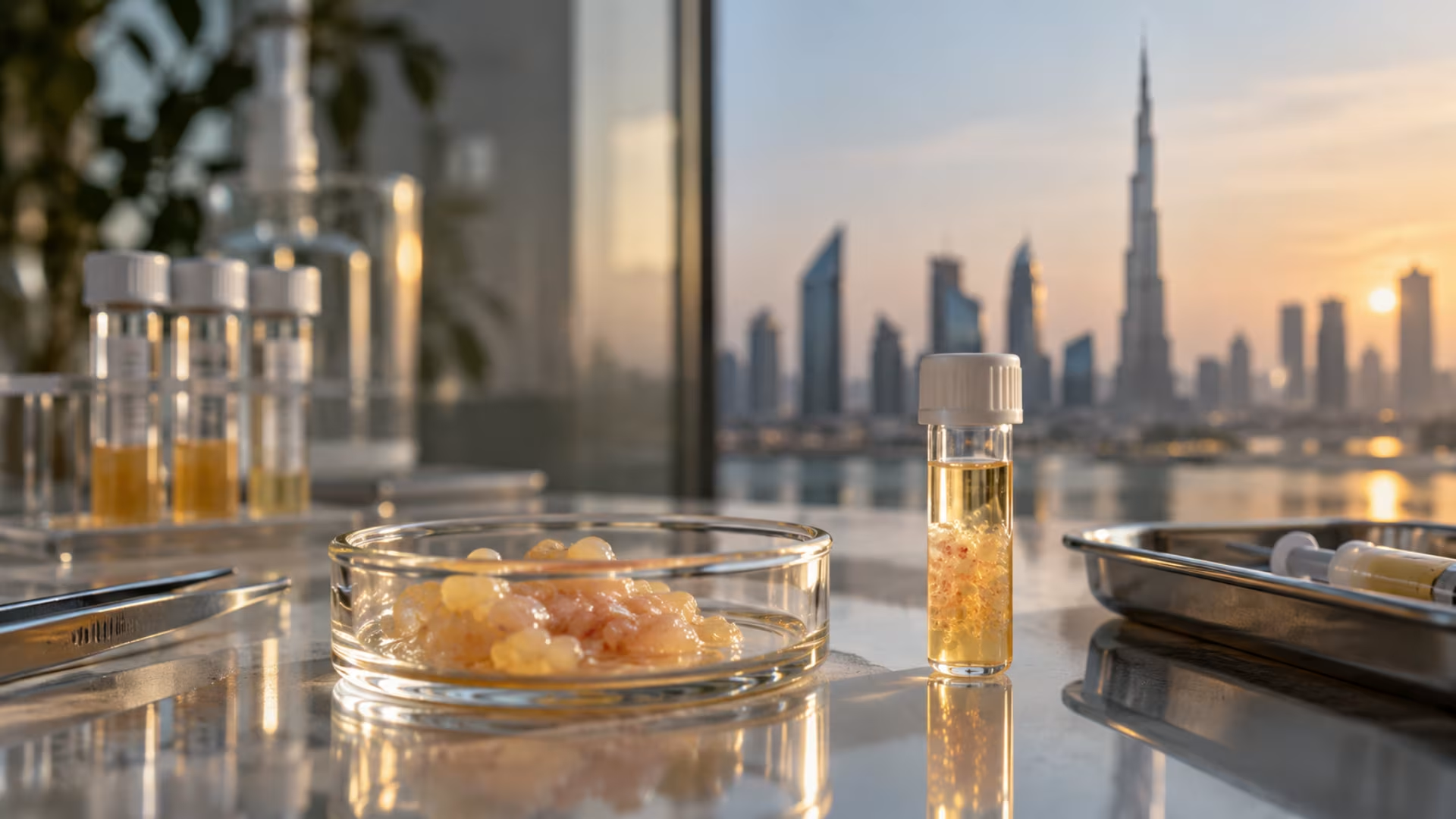
Adipose-derived treatment begins by collecting fat tissue from the patient.
Unlike a blood draw, this generally requires a small-volume liposuction-assisted or lipoaspirate-type procedure.
DHA's current standards specifically address adipose tissue collection using liposuction techniques and require personnel to be trained in adipose collection and procedure-related complications.¹
What happens after the fat is collected is what largely determines the product the patient eventually receives.
🩺 How Is the Fat Collected?
A physician typically harvests adipose tissue from an area with sufficient subcutaneous fat.
The amount and technique depend on the intended procedure, but the important point is that a fat-derived cellular treatment involves a tissue-harvesting step before processing and administration.
DHA's 2026 standards require appropriate donor assessment, informed consent, traceability, collection procedures and risk management for adipose tissue collection.¹
⚙️ What Happens to the Fat After Collection?
This is one of the most important questions to ask before treatment.
The collected tissue can follow different processing pathways.
Mechanical processing may involve washing, filtration, centrifugation or mechanical separation.
DHA's Appendix 8 specifically lists adipose tissue mechanically processed to obtain SVF through washing, filtration and centrifugation as an example of a Category 1 minimally manipulated product.¹
Enzymatic processing uses enzymes to dissociate adipose tissue and isolate cellular components.
DHA classifies enzymatically processed SVF as substantially manipulated and places it within Category 2.¹
Culture expansion goes further. Cells are isolated and grown outside the body to increase their number. DHA similarly classifies ex vivo-expanded MSCs within Category 2.¹
⚖️ How Does Dubai Regulate Fat-Derived Stem Cell Treatments?
Dubai does not regulate every adipose-derived treatment as though it were the same procedure.
DHA's Standards for Stem Cell Services, effective February 28, 2026, distinguish therapies according to factors including the source of the cells, how extensively they are processed, their intended use and whether they undergo substantial manipulation.¹
✅ Same-Day Mechanically Processed SVF
DHA states that intraoperative use of autologous adipose-derived SVF may qualify as a minimally manipulated human cell and tissue product where the applicable criteria are satisfied.
Examples of minimal manipulation include:
- washing;
- filtration;
- centrifugation;
- mechanical separation.
These procedures must not substantially alter the relevant biological characteristics of the tissue or cells. Category 1 also requires criteria around autologous use, homologous function and appropriate clinical use.¹
Appendix 8 specifically lists mechanical processing of adipose tissue to obtain SVF for cartilage support, soft-tissue repair and wound healing.¹
🧫 Enzymatically Processed SVF and Culture-Expanded Cells
The pathway changes when processing goes beyond minimal manipulation.
DHA's Category 2 framework includes:
- ex vivo-expanded mesenchymal stromal cells;
- enzymatically processed SVF;
- SVF otherwise subjected to substantial manipulation;
- processed microfat or nanofat where the procedure falls beyond the Category 1 framework.
Category 2 therapies are considered investigational or clinical-trial use rather than routine clinical treatments and require DHA-approved protocols and structured investigation.¹
For advanced therapy medicinal products, or ATMPs, DHA also requires appropriate GMP-certified or GMP-compliant manufacturing environments, quality-control documentation and product-release procedures.¹
🩺 What Fat-Derived Treatments Does DHA Specifically Recognize?
DHA's Appendix 4 lists several specialties and indications relevant to adipose-derived products.
These include:
- localized osteoarthritis and cartilage injury using autologous SVF in a same-day procedure;
- musculoskeletal pain management, including joint or spinal SVF injections;
- tendon, ligament and musculoskeletal soft-tissue support;
- autologous fat graft enrichment, wound reconstruction and postsurgical soft-tissue repair.¹
This does not mean every patient is an appropriate candidate, nor that every procedure marketed under these labels is automatically permitted. The exact product, processing method, indication, specialist and facility still matter.
📋 Why Processing Matters in Dubai
🔗 Read more → Is Stem Cell Therapy Legal in Dubai? DHA Rules Explained
📊 Does Fat Stem Cell Therapy Work?
The strongest relevant human evidence currently suggests that some adipose-derived cell therapies may improve pain and function in selected patients with knee osteoarthritis.
That is not the same as proving that every fat-derived product regenerates cartilage or reverses osteoarthritis.
📈 Evidence at a Glance
A 2026 systematic review and meta-analysis included eight randomized controlled trials involving 585 patients.
Compared with inactive controls, adipose-derived therapies produced statistically significant improvements in pain at six months and improvements in functional outcomes.³
Another 2026 review examined 19 randomized controlled trials involving adipose-derived MSCs, SVF and microfragmented adipose tissue. It reported encouraging symptom outcomes, while structural regeneration remained inconsistent.⁴
A separate meta-analysis focused specifically on culture-expanded autologous adipose-derived MSCs and deliberately excluded SVF from the pooled intervention because the two are biologically distinct.
The analysis found improvements in pain and WOMAC scores but emphasized heterogeneity and limited long-term structural evidence.⁵
The practical takeaway is:
Fat-derived cellular therapies may improve symptoms for some orthopedic patients, but symptom improvement is not proof of cartilage regrowth or disease reversal.
🔗 Read more → Knee Osteoarthritis Stem Cell Therapy in Dubai: Costs, Evidence & Options
🛡️ What Are the Risks of Fat Stem Cell Therapy?
Fat-derived cell therapy involves two separate clinical stages: harvesting the tissue and administering the resulting product.
The harvesting stage carries the risks associated with liposuction-assisted adipose collection.
DHA specifically requires risk management for liposuction-related complications, trained personnel and appropriate clinical oversight.¹
Processing and administration add further considerations, including:
- sterility;
- contamination control;
- traceability;
- product identity;
- preparation method;
- administration technique;
- procedure-related pain and inflammation.
A 2026 review focused specifically on autologous adipose-derived SVF in human clinical use found that reported adverse events were predominantly mild and procedure-related, including transient pain, swelling and local inflammation.
However, the authors also emphasized major limitations in the evidence, including small and heterogeneous patient groups, variable preparation methods and relatively short follow-up.⁶
That means current short-term safety findings are reassuring, but they should not be interpreted as proof that every SVF protocol has an established long-term safety profile.
🦴 Fat-Derived SVF vs Bone Marrow BMAC: What’s the Difference?
SVF and bone marrow aspirate concentrate, or BMAC, are both autologous regenerative approaches, but they come from different tissues and produce different biological preparations.
There is no universal evidence-based reason to declare one tissue source superior for every patient.
The more useful question is whether the specific product, diagnosis, route and clinical protocol make sense for the problem being treated.
🔗 Read more → Regenerative Medicine in Dubai: Treatments, UAE Regulations & Patient Guide
💰 How Much Does Fat Stem Cell Therapy Cost in Dubai?
There is no reliable single average price for fat stem cell therapy in Dubai.
The main reason is that the term can describe procedures with very different levels of complexity.
A same-day mechanically processed SVF procedure is not economically comparable with:
- culture-expanded adipose-derived cells;
- multi-joint treatment;
- laboratory manufacturing;
- more complex surgical protocols;
- tissue banking or later re-administration.
One published Dubai SVF program currently lists €6,800 for one treated region, equivalent to approximately AED 28,750 (USD $7,810), and €10,900 for two large regions, approximately AED 46,090 (USD $12,520) at September 2026 exchange rates.⁷
These are individual provider-published examples, not a Dubai market average.
The total cost may vary with:
- adipose harvesting;
- anesthesia and procedural fees;
- processing method;
- laboratory involvement;
- imaging;
- number of joints or treatment areas;
- product type;
- storage;
- follow-up.
A very low headline price is therefore difficult to interpret unless the clinic explains what is being harvested, how it is processed, what is actually administered and what the quoted fee includes.
🔗 Read more → Stem Cell Therapy Cost in Dubai: Pricing Guide
🧭 How to Evaluate a Fat Stem Cell Treatment in Dubai
You do not need to become a cell biologist to evaluate a treatment proposal.
You do need to know exactly what you are being offered.
🔎 1. What Exact Product Will I Receive?
Ask whether the treatment is:
- SVF;
- mechanically processed adipose tissue;
- microfragmented fat;
- culture-expanded adipose-derived MSCs;
- or another product.
“Fat stem cells” alone is not specific enough.
⚙️ 2. How Will My Fat Be Processed?
Ask whether processing is:
- mechanical;
- enzymatic;
- or followed by laboratory culture and expansion.
That distinction can materially change both the biological product and its regulatory pathway.
🕐 3. Is It Same-Day or Laboratory-Expanded?
A same-day SVF procedure and an expanded-cell protocol are not simply different doses of the same treatment.
They are different cellular preparations.
🎯 4. What Condition Is Being Treated, and by What Route?
Evidence from an intra-articular knee procedure should not automatically be used to support a systemic, neurological, cosmetic or unrelated application.
Ask whether the evidence being cited actually resembles the treatment proposed to you.
⚖️ 5. Under Which DHA Pathway Is It Being Provided?
Ask the provider how it classifies the exact product and procedure under current DHA standards.
A general statement that a clinic or physician is licensed does not by itself establish the regulatory status of every cellular treatment offered there.
🔗 Read more → How to Choose the Best Stem Cell Clinic in Dubai for Your Condition
❓ Frequently Asked Questions About Fat Stem Cell Therapy in Dubai
Is SVF the same as stem cells?
No. Stromal vascular fraction is a heterogeneous mixture of cells obtained from adipose tissue. It contains stromal and progenitor populations but is not equivalent to a purified or culture-expanded stem-cell product.²
Is fat stem cell therapy legal in Dubai?
Some adipose-derived procedures can fall within defined DHA pathways, while substantially manipulated treatments are subject to more restrictive requirements. DHA places enzymatically processed SVF and ex vivo-expanded MSCs within Category 2 investigational use, while certain mechanically processed autologous products may qualify for Category 1 when the relevant criteria are satisfied.¹
Are fat-derived stem cells better than bone marrow stem cells?
There is no universal answer. Adipose-derived SVF and bone marrow products such as BMAC differ in tissue source, composition and processing. Suitability should depend on the diagnosis, proposed product, supporting evidence and clinical protocol rather than assuming one source is always superior.
Can fat-derived stem cells regrow cartilage?
Current clinical evidence does not establish reliable cartilage regeneration. Randomized-trial reviews show more consistent evidence for improvements in pain and function than for structural restoration of damaged cartilage.³⁻⁵
Are fat stem cells taken with liposuction?
Adipose-derived procedures generally begin with liposuction-assisted collection of fat tissue or lipoaspirate. DHA's current standards specifically address adipose collection using liposuction techniques and require relevant safety procedures and trained personnel.¹
✅ The Bottom Line
Fat stem cell therapy in Dubai can refer to several materially different regenerative procedures.
The most important distinction is not simply that the treatment comes from fat. What matters is:
how the tissue is collected → how it is processed → what biological product results → what condition is being treated → which DHA pathway applies.
Before comparing prices, cell counts or marketing claims, start with one question:
What exactly happens to my fat between harvesting and treatment?
The answer can tell you far more about what you are actually considering.
If you are comparing regenerative treatment options in Dubai, STEMCIERGE can help you organize the proposed treatment, supporting evidence, pricing and questions to ask before making a decision.
🔬 How STEMCIERGE Researched This Guide
STEMCIERGE prepared this guide using current Dubai Health Authority regulations, established international terminology for adipose-derived cell products, and recent peer-reviewed systematic reviews and meta-analyses of human clinical research.
Regulatory statements were based primarily on DHA's Standards for Stem Cell Services, effective February 28, 2026. Clinical evidence was weighted toward randomized controlled trials and systematic reviews, with distinctions preserved between SVF, microfragmented adipose tissue and culture-expanded adipose-derived cell products when the underlying research treated them differently.¹⁻⁶
Commercial provider information was used only to illustrate current market pricing, not to establish safety or efficacy.
Because regenerative-medicine research and regulation continue to evolve, treatment-specific information should be rechecked before proceeding.
🔖 Medical Disclaimer
This article is for educational and informational purposes only and does not constitute medical advice. STEMCIERGE does not diagnose medical conditions, prescribe treatment or replace consultation with a qualified healthcare professional.
Adipose-derived stem-cell, stromal vascular fraction and other cell-based procedures vary in processing, biological product, clinical indication and regulatory status. Individual suitability depends on diagnosis, medical history and the exact treatment being considered.
Anyone considering treatment should discuss the potential benefits, limitations, alternatives and risks with an appropriately licensed healthcare professional and verify the facility, practitioner, cellular product and applicable regulatory pathway before proceeding.
📚 References
¹ Dubai Health Authority. Standards for Stem Cell Services. Code DHA/HRS/HPSD/ST-68. Issue date: December 31, 2025. Effective February 28, 2026.
² Bourin P, Bunnell BA, Casteilla L, et al. Stromal Cells from the Adipose Tissue-Derived Stromal Vascular Fraction and Culture Expanded Adipose Tissue-Derived Stromal/Stem Cells: A Joint Statement of the International Federation for Adipose Therapeutics and Science and the International Society for Cellular Therapy. Cytotherapy. 2013;15(6):641-648. doi:10.1016/j.jcyt.2013.02.006.
³ Madrazo-Ibarra A, de la Huerta-Meza D, Gutierrez Naranjo JM, Vad VB. Adipose-Derived Cell Therapies Versus Nonactive Controls for Knee Osteoarthritis: A Systematic Review and Meta-analysis of Randomized Controlled Trials. American Journal of Physical Medicine & Rehabilitation. 2026;105(6):504-511. doi:10.1097/PHM.0000000000002908.
⁴ Batista JD, Silva LD, Batista JD, et al. Intra-Articular Adipose-Derived Cell Therapies for Knee Osteoarthritis: A Systematic Review of Randomized Controlled Trials. Frontiers in Medicine. 2026;13:1771008. doi:10.3389/fmed.2026.1771008.
⁵ Han JH, Jung M, Chung K, et al. Autologous Adipose-Derived Mesenchymal Stromal Cell Injection for Knee Osteoarthritis Improves Pain and Function Without a Clear Increase in Adverse Events: A Systematic Review and Meta-analysis of Randomized Controlled Trials. Knee Surgery, Sports Traumatology, Arthroscopy. 2026. doi:10.1002/ksa.70569.
⁶ Nonnarath C, Serratrice N. Safety Profile of Autologous Adipose-Derived Stromal Vascular Fraction in Clinical Use: An Exhaustive Literature Review. Stem Cell Research & Therapy. 2026;17:90. doi:10.1186/s13287-026-04909-6.
⁷ Published Dubai SVF Treatment Pricing Example. Used only as an illustrative market example and not as evidence of efficacy or as a citywide pricing benchmark. Accessed September 2026.