🧬 Does Stem Cell Therapy Work for Back Pain?
Stem cell therapy is showing encouraging potential for selected people with chronic disc-related lower back pain, particularly degenerative disc disease, but it is not one standardized treatment and results vary significantly between patients and protocols.
If you have lived with back pain for months or years, you may already have tried physical therapy, medication, injections, chiropractic treatment, or other approaches without getting the relief you hoped for.
That is exactly why regenerative medicine has attracted so much attention.
Instead of simply masking pain, researchers are investigating whether certain cell therapies can influence inflammation and the damaged environment inside a degenerating spinal disc.
The most developed area of research is intradiscal cell therapy for chronic lumbar discogenic pain.
This means a cell product is injected directly into a suspected painful lumbar disc using imaging guidance.
A 2026 meta-analysis of seven randomized controlled trials found that patients receiving mesenchymal stromal cells, or MSCs, improved more than patients receiving sham or placebo procedures.
The average difference was approximately 6.67 points on a 100-point pain scale and 4.05 points on the 100-point Oswestry Disability Index (ODI).¹
The ODI measures how much back pain interferes with normal life, including walking, sitting, sleeping, lifting, and personal care.
The average benefit across all studies was modest.
But averages only tell part of the story.
Some individual trials and patient subgroups have produced more encouraging results, suggesting that who is treated and exactly what they receive may be critical.
That leads to a much more useful question than simply asking whether stem cells “work”:
"Does my condition resemble the patients who have actually benefited in clinical research?"
🎧 Listen to our deep dive: Back Pain Stem Cell Therapy in Thailand (Does It Work? Costs & Evidence)
🩻 Why Your Exact Back or Spine Diagnosis Matters
“Back pain” is a symptom. It does not tell you what is causing the pain.
Two people can both describe severe lower back pain while having completely different problems underneath.
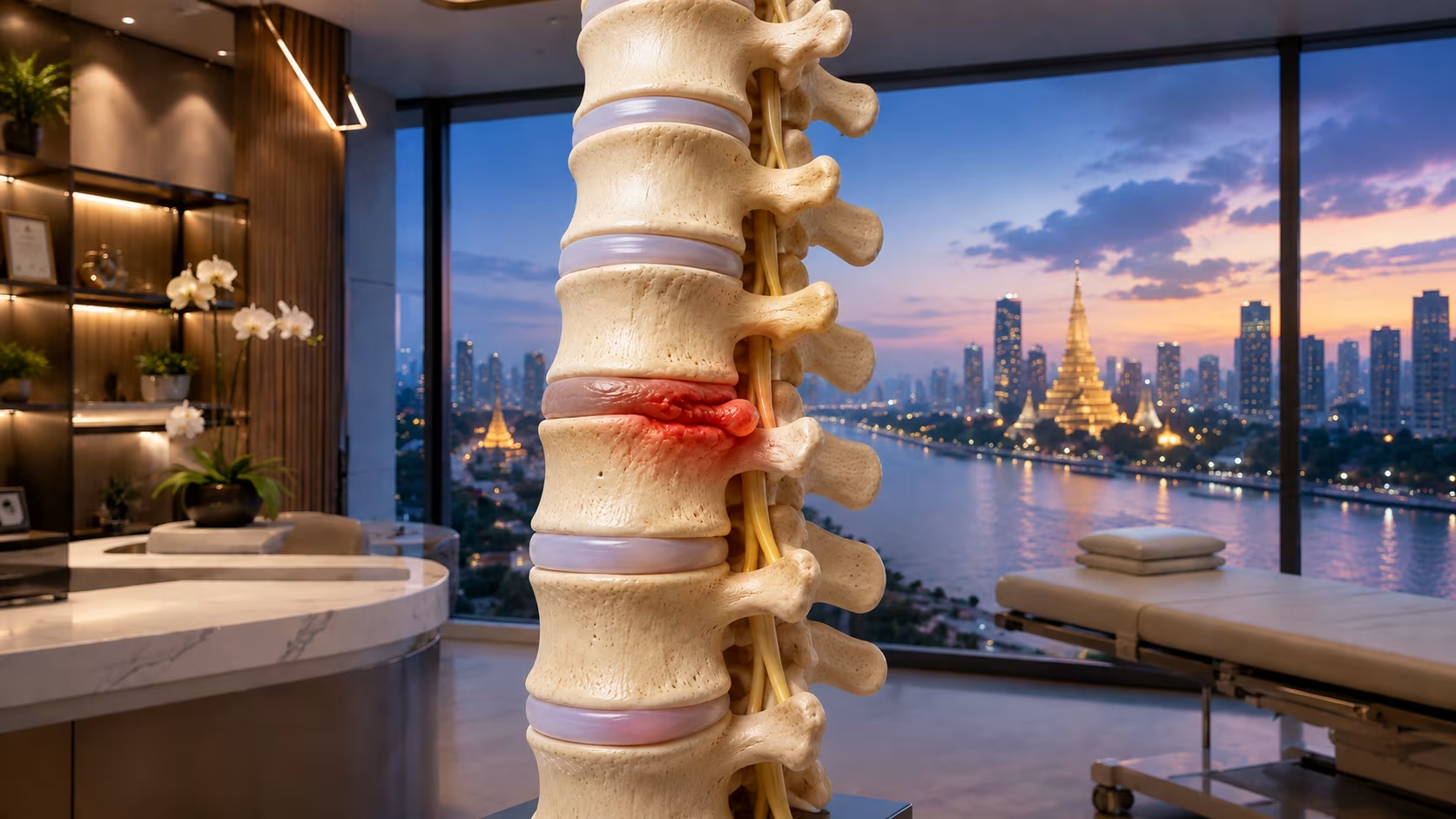
One may have pain believed to come from a degenerating disc.
Another may have a compressed nerve caused by a herniated disc.
Someone else may have spinal stenosis, arthritic facet joints, instability between two vertebrae, or pain related to previous spine surgery.
Those problems cannot reasonably be treated as if they are the same.
👤 Two People With “Back Pain” Can Need Very Different Care
Imagine two patients considering stem cell therapy in Thailand.
The first is 47 years old.
They have experienced mainly central lower back pain for 18 months.
Their MRI shows moderate degeneration at one lumbar disc.
They do not have progressive weakness, and structured rehabilitation has helped, but not enough.
The second is 69.
They have severe lumbar spinal stenosis, leg pain when walking, vertebral slippage, and new weakness in one foot.
Both might search Google for stem cell therapy in Thailand for back pain.
Both could potentially find clinics willing to discuss regenerative treatment.
But their situations are very different.
The first patient resembles some of the people included in clinical trials of intradiscal cell therapy.
The second has signs of structural and neurological disease that require specialist assessment first.
A biological injection may influence inflammation or tissue signaling.
It cannot physically widen a severely narrowed spinal canal or stabilize a vertebra that is slipping.
That is why diagnosis needs to come before the treatment package.
🧠 An Abnormal MRI Does Not Always Explain Your Pain
MRI scans are extremely useful, but they do not tell the whole story.
Degenerative changes become increasingly common as we age, including in people who have no back pain at all.
A systematic review of 3,110 people without symptoms found disc degeneration in approximately 37% of 20-year-olds and 96% of 80-year-olds.
Disc bulges increased from around 30% to 84% across the same ages.²
That does not make MRI findings unimportant.
It simply means the scan has to make sense alongside your symptoms.
A good spine assessment should consider:
- where the pain is located;
- whether it travels into the leg or arm;
- numbness or tingling;
- weakness;
- what movements make symptoms better or worse;
- previous treatment and how you responded;
- physical examination findings; and
- the actual MRI or CT images.
For more complicated cases, reviewing the original DICOM imaging files can be far more useful than relying only on the written radiology report.
📊 Which Spine Conditions Have the Most Evidence for Stem Cell Therapy?
The evidence is not equally strong for every spine condition.
The clearest human research has focused on chronic lumbar discogenic pain associated with moderate degenerative disc disease.
For other spine problems, the research is earlier or the treatment goal is fundamentally different.
The practical takeaway is simple:
Evidence for one type of back pain should not automatically be applied to another.
This is also why a personalized case review can be more useful than comparing treatment menus online.
🧪 What Does “Stem Cell Therapy” Actually Mean?
This is where many patients understandably get confused.
“Stem cell therapy” sounds like one treatment.
It is not.
Two clinics can both advertise stem cell treatment for back pain while offering completely different biological products.
🦴 Bone Marrow Aspirate Concentrate (BMAC)
BMAC is produced by taking bone marrow, usually from the pelvis, and concentrating it for same-day use.
It contains a mixture of platelets, signaling molecules, blood cells, and a relatively small number of progenitor cells.
BMAC should not be treated as identical to a purified, laboratory-expanded MSC product.³
🧬 Culture-Expanded Autologous MSCs
These cells come from the patient's own tissue, often bone marrow.
They are then grown or “expanded” in a laboratory so a larger number of cells can be prepared for treatment.
Because the cells undergo more laboratory processing, manufacturing quality becomes especially important.
👥 Donor-Derived MSCs and MPCs
Allogeneic products come from a donor rather than the patient.
Some of the more interesting clinical trials in degenerative disc disease have investigated standardized donor-derived MSCs or mesenchymal precursor cells, known as MPCs.
But one donor-derived product cannot automatically be considered equivalent to another.
Manufacturing methods matter.
So do cell identity, viability, potency, dose, storage, and quality control.
👶 Umbilical Cord Tissue-Derived MSCs
Umbilical cord tissue is another commonly discussed MSC source.
You may see clinics emphasize phrases such as “young stem cells” or “umbilical cord stem cells.”
The source alone does not tell you whether the treatment is high quality.
You still need to know:
- who manufactured the cells;
- how donors were screened;
- how the cells were expanded;
- what the final viable dose is;
- how sterility is tested;
- how the product is stored and transported; and
- what evidence supports that particular treatment.
🩸 PRP Is Not Stem Cell Therapy
Platelet-rich plasma, or PRP, is created from the patient's blood.
It contains concentrated platelets and biological signaling molecules, but it is not a stem cell treatment.
Some regenerative spine protocols combine PRP with cell therapy, so it is worth understanding what each part of the treatment is intended to do.
🔬 Exosomes Are Not Stem Cells Either
Exosomes are very small particles released by cells.
Researchers are interested in the signals they carry and their possible regenerative effects, but exosomes are not living stem cells.
Commercial exosome treatments remain investigational.
🔗 Read more → Stem Cell Dosage: Does a Higher Cell Count Mean Better Treatment? (Comparison Tool)
💉 Where the Cells Are Delivered Matters Too
The route of treatment can be just as important as the cell source.
🎯 Intradiscal Injection
Cells are injected directly into an intervertebral disc using fluoroscopy or CT guidance.
This is the delivery method most closely associated with clinical trials for degenerative disc disease.
🦴 Facet Joint Injection
The product is injected into the small joints at the back of the spine.
This is intended for suspected facet-joint pain rather than discogenic pain.
Evidence for MSC therapy in facet joints remains early.
⚡ Epidural or Transforaminal Injection
Treatment is placed into the epidural space or around an irritated nerve root.
Research in this area has more often involved PRP than MSCs.
🩸 Intravenous Infusion
Cells are infused through a vein.
This is fundamentally different from placing a studied biological product directly into a suspected painful spinal disc.
An IV infusion also cannot physically decompress a trapped nerve or widen a narrowed spinal canal.
The key question is not simply what cells are being used, but also why they are being delivered to that particular location.
📚 What Do the Latest Clinical Trials Actually Show?
The evidence is promising in some areas and still evolving overall.
Several studies have found improvements in pain and function after intradiscal cell therapy.
Others have shown substantial improvement in both the treatment and control groups.
That is not unusual in a developing field.
It suggests that the treatment effect may depend heavily on the exact product and the patient being treated.
🧪 Four Important Trials to Understand
🧠 What RESPINE Really Tells Us
The RESPINE trial is often useful for understanding why individual study results need context.
At 12 months, 74% of patients receiving cells met the study's responder definition.
That sounds impressive.
But 69% of people receiving the sham procedure also met that definition, and the difference was not statistically significant.⁴
This does not mean cell therapy is simply a placebo.
It tells us that this specific MSC product and protocol did not demonstrate superiority in this particular trial.
Back pain also naturally fluctuates.
Rehabilitation, expectations, procedure effects, and close medical follow-up can all influence outcomes.
The wider lesson is that regenerative spine medicine should be judged product by product and patient group by patient group rather than as one single treatment category.
🖼️ What About Disc Regeneration?
The DREAM trial provides another useful lesson.
Researchers reported some changes in imaging after treatment, but patients receiving cells did not show a clear clinical advantage over the sham group within six months.⁵
That distinction matters because the phrase “regenerating the disc” can sound far more certain than the science currently allows.
A change on MRI is interesting.
But what matters most to the patient is whether they have less pain, move better, sleep better, return to work, exercise again, or regain activities they had lost.
🧬 Why Some Results Are Still Encouraging
A much larger 2025 randomized study involving 404 patients did not meet its main efficacy endpoints across the entire study population.
However, a prespecified subgroup appeared to respond more favorably to a particular mesenchymal precursor cell product combined with hyaluronic acid.⁶
That finding is important.
It suggests that the field may be moving toward a more precise approach rather than a one-size-fits-all treatment.
The question may eventually become less:
“Do stem cells work for degenerative disc disease?”
And more:
“Which biological product works best, for which type of patient, at which stage of disease?”
👤 Who May Be a Good Candidate for Intradiscal Cell Therapy?
There is no universal candidate profile, but the patients most similar to those studied in clinical trials tend to share certain characteristics.
They may have:
- chronic lower back pain lasting at least three to six months;
- mainly central or axial lumbar pain;
- one or two plausible painful lumbar discs;
- moderate degenerative disc disease;
- insufficient improvement after structured conservative treatment;
- no major neurological compression;
- no severe instability;
- no active infection, fracture, or tumor; and
- the ability to participate in rehabilitation and follow-up.
This does not mean you can determine candidacy from a checklist.
The difficult part is establishing whether a particular disc is actually the likely source of your pain.
That is where specialist assessment becomes important.
🚩 When Another Evaluation May Need to Come First
Certain findings can change the priority:
- progressive weakness;
- severe spinal stenosis;
- significant nerve compression;
- spinal cord compression;
- cervical myelopathy;
- substantial spondylolisthesis or instability;
- severe disc collapse;
- infection;
- fracture;
- suspected cancer; or
- no identifiable pain generator.
Someone with these findings may still have regenerative options worth discussing later.
But the structural or neurological issue should be understood first.
🚨 What Stem Cells Cannot Fix Mechanically
Regenerative treatments are designed to influence biology.
They are not surgical tools.
A cell injection cannot physically:
- widen a severely narrowed spinal canal;
- remove a large herniated disc fragment;
- stabilize a slipping vertebra;
- repair broken hardware; or
- decompress the spinal cord.
This does not mean everyone with one of these problems needs surgery.
It means the anatomy needs to be understood before deciding where regenerative treatment fits.
⚠️ When Back Pain Requires Urgent Medical Attention
Seek urgent medical assessment for symptoms such as:
- new urinary retention or incontinence;
- new bowel dysfunction;
- numbness around the groin or saddle area;
- rapidly worsening arm or leg weakness;
- fever combined with severe spinal pain;
- major trauma; or
- symptoms suggesting spinal cord compression.
These symptoms can sometimes indicate conditions where waiting for an elective regenerative consultation would not be appropriate.
🇹🇭 Is Stem Cell Therapy for Back Pain Legal in Thailand?
Thailand has been developing a clearer regulatory framework for advanced cell therapies.
In March 2026, the Thai FDA outlined an end-to-end system for Advanced Therapy Medicinal Products (ATMPs), including controls before human use, manufacturing requirements, and medicine registration for commercial products.⁷
A further regulatory development reported in May 2026 brought culture-expanded MSCs and other substantially manipulated cell products within Thailand's ATMP medicines framework.⁸
For patients, this is a positive development.
It means there is increasingly clear regulatory attention around advanced biological therapies.
But there is an important distinction:
Thailand regulating stem cell products does not mean every stem cell protocol marketed for back pain is automatically approved.
📋 Six Separate Things Worth Checking
When evaluating treatment, separate these questions:
- Is the hospital or clinic appropriately licensed?
- Is the treating doctor licensed and suitably qualified?
- Is the manufacturing facility operating under the appropriate standards?
- Is the treatment being provided as registered therapy, authorized research, or another permitted pathway?
- What is the regulatory status of the exact biological product?
- Does that status apply to the proposed condition and delivery route?
These distinctions matter.
A respected hospital may still offer an investigational treatment.
A high-quality laboratory can manufacture a biological product without proving that the product works for every condition.
And a cell product can have a legitimate regulatory pathway without being approved as a treatment for all forms of back pain.
🔗 Read more → Stem Cell Therapy Regulations in Thailand
🔎 How to Evaluate a Stem Cell Clinic in Thailand
A credible provider should be able to explain the proposed treatment clearly before asking you to commit financially.
You should not need a medical degree to understand the answers.
👨⚕️ Start With the Diagnosis
Ask:
- What exactly do you believe is causing my pain?
- Which doctor reviewed my MRI or CT images?
- What is the doctor's specialty?
- Why does this treatment make sense for my diagnosis?
- What findings would make you recommend against treatment?
That last question is especially revealing.
A provider that can explain who should not undergo treatment may inspire more confidence than one that appears to consider almost everyone eligible.
🧬 Understand the Cell Product
Ask:
- What exactly are you injecting?
- Where do the cells come from?
- Are they my own cells or donor-derived?
- Are they culture-expanded?
- What is the final viable dose per target?
- Who manufactures the product?
- What quality tests are performed before release?
For laboratory-produced cell products, relevant testing can include identity, viability, sterility, endotoxin, mycoplasma, and donor screening.
📑 Make Sure the Evidence Matches the Treatment
This is one of the most important checks.
Ask which published human trial most closely resembles the protocol being offered to you.
Then compare:
- your diagnosis;
- the cell product;
- the dose;
- the injection route;
- the target being treated; and
- the type of patient enrolled in the study.
For example, an intradiscal trial using bone marrow-derived MSCs for discogenic low back pain cannot automatically validate an IV umbilical cord MSC program for spinal stenosis.
💉 Ask About the Procedure and Follow-Up
You should also understand:
- who performs the procedure;
- what image guidance is used;
- how infection risk is reduced;
- what happens if you develop a complication;
- how outcomes are measured;
- who follows you after you return home; and
- what happens if treatment does not produce the expected improvement.
🔗 Read more → How to Compare International Stem Cell Treatments: Objective Evaluation Scorecard
⚠️ What Are the Risks?
Stem cell treatment for the spine is not risk-free.
There are two main categories to understand: risks from the procedure and risks related to the biological product.
🦠 Procedure-Related Risks
Possible complications can include:
- infection;
- discitis or osteomyelitis;
- bleeding or hematoma;
- nerve injury;
- dural puncture;
- temporary worsening of pain; and
- complications related to sedation or anesthesia.
A 2021 review estimated infection-related complications at approximately 0.74% following intradiscal MSC injection, while also emphasizing that the available studies were limited and complications may be under-reported.⁹
A published case report has also described discitis and osteomyelitis following a cell-based intradiscal procedure.¹⁰
One case cannot tell us how common a complication is.
It does remind us why sterile technique, appropriate procedural facilities, and a clear post-treatment emergency plan matter.
🧫 Product-Related Risks
Advanced biological products can introduce additional concerns such as:
- contamination;
- pathogen transmission;
- immune reactions to donor-derived products;
- poor cell viability;
- inconsistent product quality;
- manufacturing problems;
- storage or transportation failures; and
- unknown long-term effects with inadequately studied products.
The goal is not to be frightened by these possibilities.
It is to choose a treatment pathway where they are taken seriously and properly managed.
✈️ What Does Stem Cell Treatment in Thailand Usually Involve?
For international patients, the procedure itself is only one part of the journey.
A responsible process starts before you book the flight.
📁 Before You Travel
You may be asked to provide:
- recent MRI DICOM files and the radiology report;
- CT scans or X-rays where relevant;
- previous surgery or procedure records;
- a medication list;
- information about anticoagulants;
- relevant blood tests;
- infection screening; and
- a detailed medical history.
Ideally, a specialist should review the important records before treatment is confirmed.
🏥 Once You Arrive in Thailand
The medical process may include:
- an in-person consultation;
- physical examination;
- another review of your imaging;
- confirmation or revision of the diagnosis;
- informed consent;
- verification of the biological product;
- image-guided treatment where appropriate;
- observation after the procedure; and
- rehabilitation and travel instructions.
Sometimes the in-person assessment changes the treatment plan.
That is not necessarily bad news.
It is what a genuine medical evaluation is supposed to do.
🏠 After You Return Home
Good aftercare should continue after you leave Thailand.
Depending on the procedure, this may include:
- scheduled follow-up appointments;
- repeat pain and disability scores;
- gradual return to exercise;
- rehabilitation;
- communication with your local physician; and
- clear instructions about warning signs.
The quality of follow-up is especially important when you are receiving treatment in another country.
💰 How Much Does Stem Cell Therapy for Back Pain Cost in Thailand?
There is no single useful price for stem cell therapy for back pain in Thailand because treatment protocols can differ dramatically.
Public medical-travel websites currently advertise back-pain stem cell programs in a broad range of roughly US$5,000 to US$16,000, although packages could easily fall way above this range.
These figures should be viewed as advertised examples rather than a reliable national average.¹¹
One quote might cover a basic IV infusion.
Another could involve:
- an orthopedic or spine specialist;
- image-guided intradiscal injections;
- several treatment levels;
- expanded cell products;
- PRP;
- anesthesia;
- laboratory testing;
- rehabilitation; and
- accommodation.
Those are not comparable treatments.
💵 What Usually Changes the Price?
Major cost drivers can include:
- BMAC versus culture-expanded cells;
- autologous versus donor-derived products;
- intradiscal, facet, epidural, or IV administration;
- the viable dose delivered to each target;
- number of spinal levels;
- physician fees;
- image guidance;
- anesthesia;
- facility costs;
- laboratory testing;
- diagnostic imaging;
- rehabilitation;
- accommodation; and
- follow-up.
Be cautious about comparing clinics purely by price per million cells.
More cells do not automatically mean a better treatment.
🔄 What Are the Alternatives to Stem Cell Therapy?
The alternatives depend on what is actually causing your pain.
They may include:
- education and activity modification;
- structured physical therapy;
- graded exercise;
- appropriate medication;
- multidisciplinary pain care;
- targeted spinal injections;
- radiofrequency procedures;
- decompression surgery;
- spinal fusion; or
- disc replacement in selected cases.
It is rarely as simple as: “stem cells versus surgery.”
Many people considering regenerative medicine are not surgical candidates.
And seeing a spine surgeon does not mean you are agreeing to have surgery.
Sometimes a surgical opinion is useful simply because it helps clarify whether significant compression or instability exists.
The better question is:
"How does this particular regenerative treatment compare with the realistic alternatives for my diagnosis?"
✅ Questions to Ask Before Paying a Deposit
Before committing to a stem cell treatment in Thailand, ask:
- What exact diagnosis are you treating?
- What structure do you believe is causing my pain?
- Which doctor reviewed my actual MRI or CT images?
- What is the exact cell or biological product?
- Where do the cells come from?
- Are they autologous or donor-derived?
- Are they culture-expanded?
- What is the final viable dose per treatment target?
- Who manufactures the product?
- What regulatory pathway applies?
- Which human study most closely resembles my treatment?
- What image guidance is used?
- How do you reduce infection risk?
- How do you define treatment success?
- What happens if treatment does not work?
- Who manages complications after I return home?
- What is excluded from the quoted price?
- What finding would make you advise me not to proceed?
That final question can be surprisingly valuable.
A high-quality medical team should have clear reasons not to treat certain patients.
🧭 The Bottom Line: Is Stem Cell Therapy in Thailand Worth Exploring for Back Pain?
For the right patient, yes, it may be worth investigating.
The most promising evidence currently involves people with chronic disc-related lumbar pain and moderate degenerative disc disease, particularly when conservative treatment has not provided enough relief.
Regenerative spine medicine is still developing, and outcomes are not yet predictable enough to treat every case the same way.
But that is exactly why the details matter.
The difference between a thoughtful regenerative treatment and a generic “stem cell package” can come down to:
your diagnosis, the product, the doctor, the injection target, the manufacturing quality, and how well the protocol matches the existing evidence.
Thailand offers sophisticated private healthcare, experienced specialists, and a developing framework for advanced cell therapies.
For international patients, it can be a legitimate destination to investigate.
The goal should not be to find any clinic offering stem cells.
It should be to determine whether regenerative treatment makes sense for your case and, if it does, identify the strongest available protocol and medical team.
🩻 Request a Spine Case Review
If you are considering stem cell therapy in Thailand for chronic back or spine pain, STEMCIERGE can help you organize your imaging, diagnosis, previous treatments, and treatment goals before comparing clinic options.
A case review can help clarify:
- what information a specialist needs;
- whether your diagnosis resembles the conditions being studied;
- which questions to ask about a proposed protocol;
- how different treatment approaches compare; and
- what information may still be missing before a medical team can properly assess your case.
No treatment, medical candidacy, or outcome is guaranteed.
But you can make the decision with considerably more clarity than simply choosing a clinic based on a treatment package or testimonial.
❓ Frequently Asked Questions
Does stem cell therapy work for back pain?
Stem cell therapy is showing potential for selected patients with chronic discogenic lower back pain, especially moderate degenerative disc disease. Human trials have reported improvements in pain and function, but results vary and the evidence does not apply equally to every cause of back pain.
Can stem cells regenerate a damaged spinal disc?
Researchers are investigating whether cell therapy can improve the biological environment within a degenerating disc, and some studies have reported imaging changes. However, reliable restoration of a severely damaged or collapsed disc has not yet been established in humans.
Can stem cells cure degenerative disc disease?
Stem cell therapy should not currently be described as a cure for degenerative disc disease. The more realistic goal being studied is reducing pain, improving function, and potentially supporting the damaged disc environment.
Can stem cells fix spinal stenosis?
Stem cells cannot physically widen a severely narrowed spinal canal or remove bone, ligament, or disc material causing compression. Regenerative treatment may be discussed in some patients, but significant stenosis still requires proper structural and neurological assessment.
Can stem cells help a herniated disc or sciatica?
Research specifically involving MSCs for sciatica and nerve-root compression is more limited than the research for discogenic low back pain. The cause and degree of nerve compression therefore matter when deciding whether regenerative treatment is relevant.
Can stem cells help after spinal fusion?
Potentially in selected situations, but persistent pain after spinal fusion can have many causes. Hardware, non-union, nearby discs, facet joints, the sacroiliac joint, and nerves may all contribute. The source of pain should be identified before considering regenerative treatment.
Are umbilical cord stem cells better than bone marrow stem cells?
There is no universal evidence showing that one cell source is always superior. Product quality, cell identity, viability, potency, manufacturing, dose, route, and evidence for the specific condition may matter more than the source label alone.
Is stem cell therapy for back pain legal in Thailand?
Thailand regulates advanced cell products through an evolving ATMP framework. However, the status of the exact product and protocol still needs to be checked. Facility licensing, manufacturing standards, research authorization, product registration, and treatment indication are separate considerations.
What are the main risks?
Potential risks include infection, bleeding, nerve or dural injury, temporary pain, immune reactions, contamination, manufacturing problems, and uncertain long-term effects associated with less-studied biological products.
How long should I stay in Thailand?
There is no standard length of stay. It depends on your evaluation, the procedure performed, observation requirements, rehabilitation plan, and when your treating physician considers you safe to travel.
Will insurance cover stem cell therapy for back pain?
Investigational cell therapies are commonly self-pay. If insurance coverage is important, obtain a written coverage decision or preauthorization before committing to treatment.
What medical records are needed for a spine case review?
Recent MRI DICOM files and the radiology report are usually the starting point. Depending on your history, CT scans, X-rays, surgery records, previous treatment records, medications, and a clear symptom timeline may also be useful.
How can I verify a stem cell clinic in Thailand?
Verify the doctor, facility, biological product, manufacturer, regulatory pathway, laboratory testing, injection technique, evidence, outcome tracking, and aftercare separately. Do not rely only on testimonials, accreditation, or advertised cell counts.
📚 References
- Rahyussalim AJ, et al. Intradiscal mesenchymal stem cell therapy for degenerative disc disease: a systematic review and meta-analysis of randomized controlled trials. Asian Spine Journal. 2026. PubMed
- Brinjikji W, et al. Systematic Literature Review of Imaging Features of Spinal Degeneration in Asymptomatic Populations. AJNR American Journal of Neuroradiology. 2015. PubMed
- Review of bone marrow aspirate concentrate and mesenchymal stromal cell characteristics. 2019. PubMed
- Pers YM, et al. Allogenic bone marrow-derived mesenchymal stromal cell-based therapy for patients with chronic low back pain: the RESPINE randomized placebo-controlled trial. Annals of the Rheumatic Diseases. 2024. PubMed
- Vadalà G, et al. Intradiscal Mesenchymal Stromal Cell Therapy for Moderate-to-Advanced Disc Degeneration: DREAM Study. 2025. PubMed
- Beall DP, et al. Efficacy and safety of allogeneic mesenchymal precursor cells with and without hyaluronic acid for chronic low back pain. The Spine Journal. 2025. PubMed
- Thai Food and Drug Administration. Road to ATMPs: Thai FDA Affirms Thailand Will Not Be Left Behind. March 2026. Thai FDA
- The Nation Thailand. Report on Thailand's 2026 ministerial framework for Advanced Therapy Medicinal Products. May 2026. The Nation
- Jerome MA, et al. Intradiscal Biologic Injections and Complications: A Case Series and Review of the Literature. International Journal of Spine Surgery. 2021. Journal
- Ramos O, et al. Published case report of lumbar discitis and osteomyelitis following cell-based intradiscal treatment. 2020. PubMed
- Public Thailand medical-travel pricing examples reviewed in the STEMCIERGE research dossier. These represent advertised prices rather than a validated national clinical average.